Introducción
Dos de las habilidades más buscadas que los padres y educadores quieren que los juegos desarrollen son las habilidades matemáticas y las habilidades sociales. Esto me muestra dos cosas.
Primero, están familiarizados con las características de los juegos y juegos de mesa, entendiendo que existen soluciones en estas áreas.
Segundo, podemos identificar fácilmente problemas relacionados con estos aspectos. Y a todo esto, el factor de diversión del juego se suma; no hace falta ser experto para saber que aprender es más agradable jugando.
En los últimos diez años, durante las más de cien conferencias, talleres y sesiones de formación que he tenido el privilegio de impartir, no recuerdo una sola vez en que las matemáticas no surgieran como área de desarrollo destacada.
Por supuesto, cada caso es único, pero en este artículo, busco compilar mis respuestas más importantes, centrándome principalmente en los títulos de juegos específicos.

Acceso rápido a las secciones:
Juegos de mesa educativos matemáticos:
Game of Six, Math Dice, Mastermind, Pentomino, Smath, Mammoth Maths, Prime Climb.
Juegos de mesa modernos que impactan las habilidades matemáticas:
Ganz Schon Clever, Richochet Robots, Mahe, Schnapp den Sack, Patchwork, Qwirkle, Splendor.
Does Research Support Math Board Games?
The short answer: yes, and convincingly so. A meta-analysis from the University of Oregon found that board games improve numerical skills with a 76% probability of success — meaning that in controlled studies, children who played math-related board games outperformed non-players about three quarters of the time. Research from Vanderbilt University specifically highlighted linear number-line board games (like Shut the Box) as particularly effective for developing number sense in young children.
Perhaps most encouragingly, studies show that even 10 minutes of daily play can produce measurable improvement in math skills. This isn't about marathon study sessions — it's about consistent, enjoyable engagement with mathematical concepts.
For a deeper dive into the research behind educational games, see our article on the developmental impact of board games.
¿Qué juego de mesa ayuda con las mates?
Según mi experiencia, puede haber dos respuestas diferentes dependiendo de lo que la gente quiere decir:
La ruta de los juegos de mesa educativos matemáticos
Quieren descubrir juegos creados con el propósito específico de desarrollar un área matemática durante el juego.
El enfoque está en la transferencia de conocimientos.
La ruta de los juegos de mesa generales
Les interesan juegos de mesa que, aunque educativos, no se centran principalmente en el impacto directo en áreas matemáticas.
El enfoque está en la motivación.
Qué respuesta necesitas es algo que solo tú sabrás, así que en este artículo busco atender ambas direcciones.
En general, ya seas profesor o padre, ciertamente conoces a tus hijos mejor que yo. Algunos prefieren saber que están aprendiendo porque la concentración es importante para ellos, pero también conocemos a muchos niños que necesitan que el aprendizaje esté oculto ya que el simple hecho de tener que rendir los bloquea. Tampoco puedo saber si buscas juegos de mates porque algo es difícil, o porque algo va bien. Tanto ponerse al día como el desarrollo del talento pueden ser objetivos excelentes.
Empecemos con los llamados juegos de edutainment, donde la educación está más enfatizada. Luego, echaremos un vistazo al mundo de los juegos de mesa modernos. Lo que no se cubrirá son los juegos abstractos clásicos como el Ajedrez o el Go, ya que claramente tienen un impacto beneficioso en numerosas áreas matemáticas y se discuten frecuentemente.
The Three Levels of Math Motivation
Building on the two paths above, here is a more specific framework for choosing the right approach. This is based on years of working with children, parents, and teachers:
The child knows math is challenging but wants to improve and is willing to practice.
You don't even need educational games here — standard learning tools work fine. But games can make practice more enjoyable.
Approach: Any math game or learning tool
The child wants to improve but finds traditional methods dry and boring.
This is where dedicated educational math games shine — like Math Dice or Prime Climb. They make drill practice genuinely fun.
Approach: Educational math games
The child struggles with math and doesn't want to acknowledge it. Any direct learning feels threatening.
Hide the math. Play Splendor where the number range is small but value comparison is constant. Play Patchwork where geometry happens without anyone saying the word.
Approach: Modern games with "hidden math"
There's one overriding principle across all three levels: the fun comes first. A game that nobody wants to play teaches nothing. Whatever you choose, it has to be genuinely enjoyable — otherwise it'll gather dust on the shelf.
Looking for math games that use only a deck of cards? Check out our guide to math card games for all ages.
Quick Reference: Age x Skill x Approach
| Age Group | Key Math Skills | Educational Games | "Hidden Math" Games |
|---|---|---|---|
| Preschool (3-5) | Counting, number recognition | Shut the Box, Sum Swamp | Hi Ho Cherry-O, Hoot Owl Hoot |
| Early Elementary (6-8) | Addition, subtraction, basic operations | Game of Six, Math Dice, Mammoth Maths | Yahtzee, Blokus |
| Upper Elementary (8-12) | Multiplication, geometry, spatial reasoning | Mastermind, Pentomino, Smath, Prime Climb | Set, Qwirkle |
| Teens & Adults (12+) | Probability, optimization, complex strategy | Equate | Splendor, Patchwork, Ganz Schon Clever |
Math Board Games by Age Group
Below we organize our recommendations by age. For each group, we don't just tell you what a game teaches — we explain how the math actually happens during play.
Preschool (Ages 3-5): Counting and Number Recognition
At this age, math is about building number sense — understanding that numbers represent quantities, that counting has an order, and that "more" and "less" are meaningful comparisons. The best games for preschoolers make counting a natural part of play, not a separate exercise.
Shut the Box is a simple dice game where players roll and flip down numbered tiles that sum to the roll. A child rolling 7 might flip down 3+4, or 2+5, or 7 alone — practicing decomposition of numbers without any worksheet in sight. Sum Swamp turns addition and subtraction into a board game adventure. For the "hidden math" approach, classic games like Hi Ho Cherry-O (counting cherries in and out of a basket) and Hoot Owl Hoot (cooperative counting toward a goal) work beautifully. For more game ideas for young children, see our guide to educational board games for 6-year-olds.
Early Elementary (Ages 6-8): Addition, Subtraction, and Basic Operations
This is the age where children start performing operations — and where frustration with math often first appears. The right games can make arithmetic practice feel like play rather than homework.
Game of Six, Math Dice, and Mammoth Maths are all excellent educational options that make calculation genuinely engaging. Yahtzee is a classic that many families already own — and it's secretly a math powerhouse: children add dice, calculate combinations, and make probability-based decisions about which scoring category to fill. Blokus introduces geometry and spatial reasoning as players fit colored pieces onto a board, each piece touching only at corners.
Upper Elementary (Ages 8-12): Multiplication, Geometry, and Spatial Reasoning
By this age, children can handle more complex mathematical thinking. The games get more strategic, and the math embedded in them becomes richer.
On the educational side: Mastermind develops logical deduction (process of elimination is pure math). Pentomino puzzles teach geometric transformation — rotation, reflection, spatial fitting. Smath is essentially Scrabble for math equations. Prime Climb uses a beautiful color-coded board to make prime factorization visual and intuitive. Set (winner of 35+ awards) builds pattern recognition and logical categorization. Equate is a math crossword game that's particularly popular in classrooms. For classroom-specific advice, see our guide to math board games for the classroom. For more age-appropriate games, check out educational board games for 10-year-olds.
Teens & Adults (12+): Probability, Optimization, and Complex Strategy
For older players, the most powerful math board games are often not marketed as "educational" at all. These are modern designer board games where mathematical thinking is woven into every decision — but wrapped in engaging themes and compelling gameplay. This is where the "hidden math" approach truly shines.
Splendor, Patchwork, Ganz Schon Clever, Ricochet Robots, and Qwirkle all develop sophisticated mathematical skills through play. We go into detail on each of these in the Modern Games section below. For a much larger list aimed at older players, see our 65 math games for adults.
Math Board Games by Skill
Sometimes you know exactly which math skill you want to target. Here's a cross-reference — many games appear in multiple categories because they develop several skills at once.
Counting & Number Sense
Shut the Box, Sum Swamp, Hi Ho Cherry-O, Game of Six
Arithmetic (+, -, x, /)
Math Dice, Mammoth Maths, Smath, Equate, Yahtzee, Schnapp den Sack
Geometry & Spatial Reasoning
Pentomino, Patchwork, Blokus, Ricochet Robots
Logic & Deduction
Mastermind, Set, Ricochet Robots, abstract strategy games
Probability & Estimation
Ganz Schon Clever, Mahe, Yahtzee, Splendor
Pattern Recognition
Set, Qwirkle, Prime Climb, Splendor
Juegos de mesa educativos matemáticos
Aquí encontrarás tres tipos de juegos:
-
Juegos que se pueden jugar y hacer con pocas herramientas. Aunque no sean tan coloridos y llamativos como los juegos de mesa en caja, ofrecen objetivos de desarrollo para los niños.
-
Juegos que probablemente conoces pero que quizás no te vienen a la mente cuando piensas en desarrollo matemático.
-
Juegos de mesa creados específicamente para el desarrollo matemático directo.
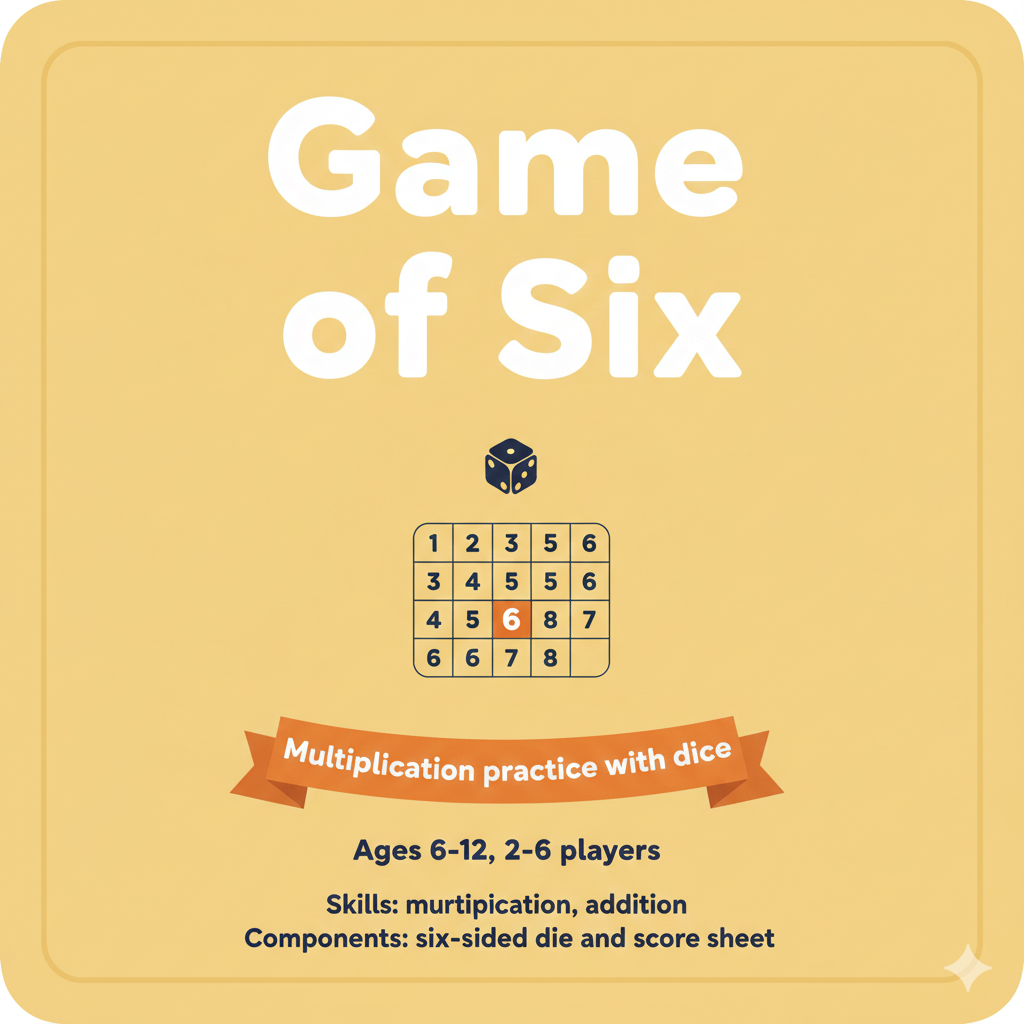
Juego del Seis
Práctica de multiplicación con dados
Material
Dado de seis caras, hoja de puntuación
Habilidades desarrolladas
Multiplicación, suma
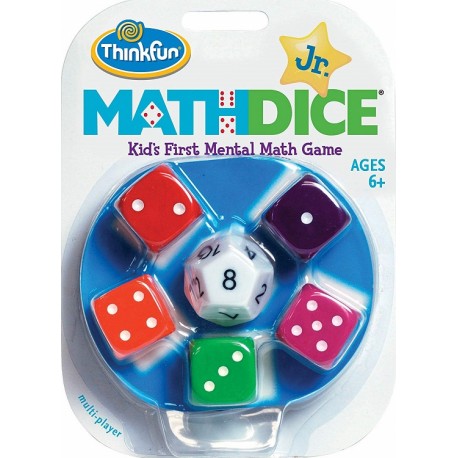
Math Dice
Juego de cálculo con número objetivo
Material
Dos dados de 12 caras, tres dados de 6 caras
Habilidades desarrolladas
Cálculo, suma y resta, sistema numérico, pensamiento lógico
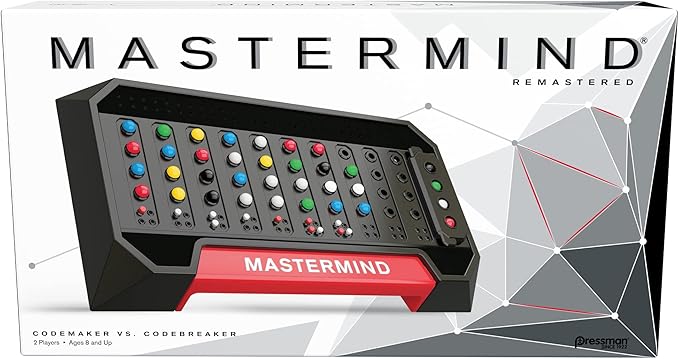
Mastermind
Juego de lógica para descifrar códigos
Material
Set de juego Mastermind con clavijas de colores
Habilidades desarrolladas
Pensamiento lógico, habilidades combinatorias y de permutación, reconocimiento de patrones
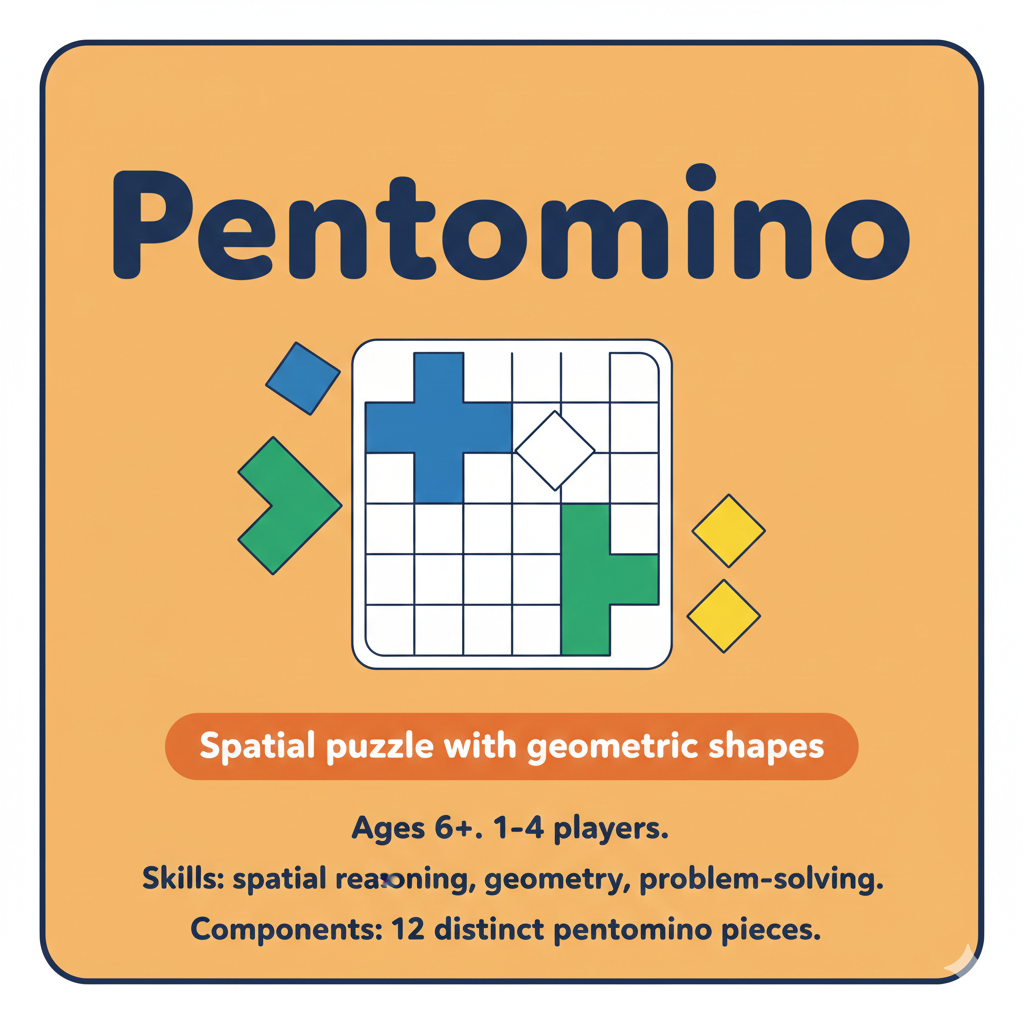
Pentomino
Rompecabezas espacial con formas geométricas
Material
12 piezas de pentominó, tablero de 8x8
Habilidades desarrolladas
Razonamiento espacial, geometría, resolución de problemas
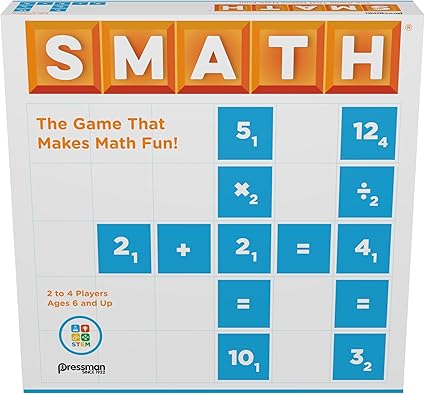
Smath
Juego de crucigrama matemático
Material
Tablero de juego Smath y fichas
Habilidades desarrolladas
Cálculo, suma y resta, multiplicación y división, pensamiento lógico, reconocimiento de patrones
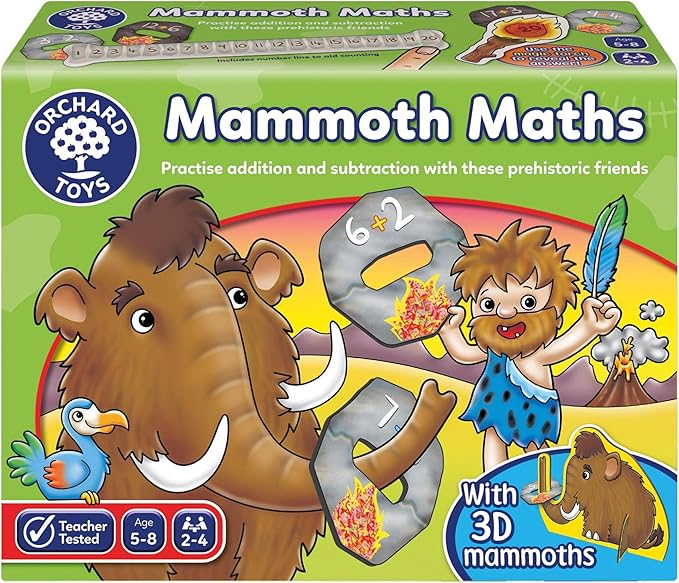
Mamut Matemático
Juego simple de suma y resta
Material
Tablero de juego, dados, anillos de piedra
Habilidades desarrolladas
Suma, resta
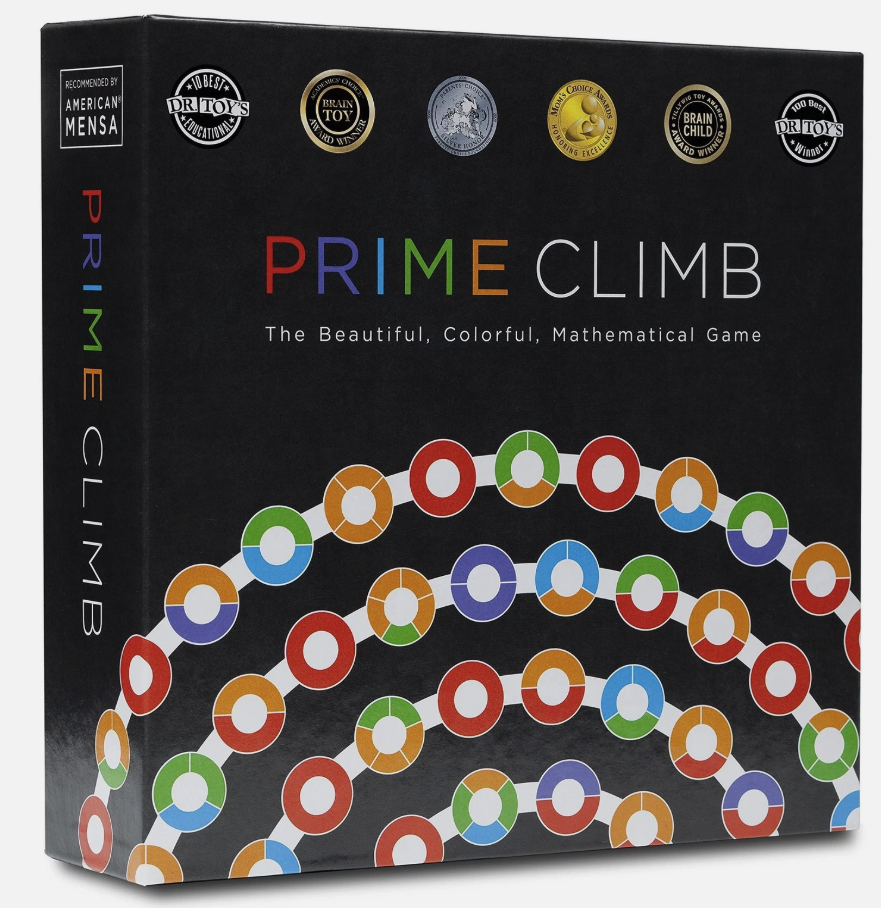
Prime Climb
Juego de estrategia con números primos
Material
Tablero de juego Prime Climb y piezas
Habilidades desarrolladas
Números primos y compuestos, multiplicación y divisibilidad, cálculo y operaciones básicas, estrategia y lógica
Juegos de mesa modernos que impactan las habilidades matemáticas
Estos juegos no son explícitamente "juegos de mates", pero todos implican pensamiento matemático y estrategia en cierto grado:
The "Hidden Math" in Three Popular Games
Patchwork: Optimization and Geometry
Patchwork is an optimization problem at its core: you maximize your territory while making economic cost-benefit decisions every turn. Since it's a spatial puzzle, geometric thinking is deeply embedded — players mentally rotate and flip polyomino pieces to find the best fit. Beyond the gameplay, the polyomino concept itself has a fascinating history, from the Tetris games of the 1980s to modern board games by Uwe Rosenberg (Patchwork's designer also created A Second Chance — another excellent example). Even the end-game scoring involves practical arithmetic: adding points, subtracting penalties, applying the 2x multiplication table for empty spaces.
Splendor: Resource Engine Building and Value Comparison
Splendor is one of the tightest, most elegant games in the mainstream market — and that's precisely what makes it mathematically rich. You're building a resource engine and trying to understand its math. A collection of seemingly worthless items is the key to valuable ones, because those cheap cards let you reach the 15-point target faster than players who chase expensive cards from the start. The typical mistake: someone reaches 8-9 points while another player sits at 3-4, but that second player has been building an engine that suddenly produces cards cheaply or free, flipping the match to 15-12. Add probability estimation and risk assessment (available cards change randomly), plus pattern recognition (who can spot the colors available and the colors needed with least effort), and you have deep mathematical engagement disguised as a gem-trading game.
Ganz Schon Clever: Combinatorial Point Maximization
This is a combinatorial point-maximization puzzle with dice. Players try to activate chain reactions and synergies across different colored scoring tracks, where every decision affects future possibilities. It's essentially a decision tree: each dice placement opens or closes multiple future scoring paths. The mathematical skills practiced include probability estimation (which dice results are likely), optimization under constraints (limited actions per turn), and systems thinking (how one track interacts with another).
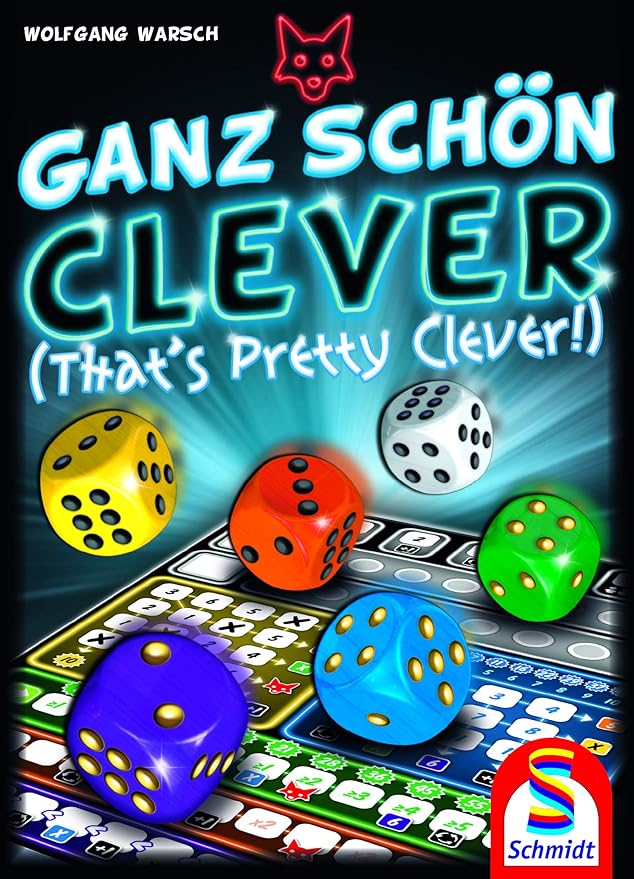
Ganz Schön Clever
Juego de estrategia con tirada de dados
Material
Seis dados, hoja de puntuación
Habilidades desarrolladas
Combinaciones y permutaciones, suma, multiplicación, estrategia y toma de decisiones, lógica matemática
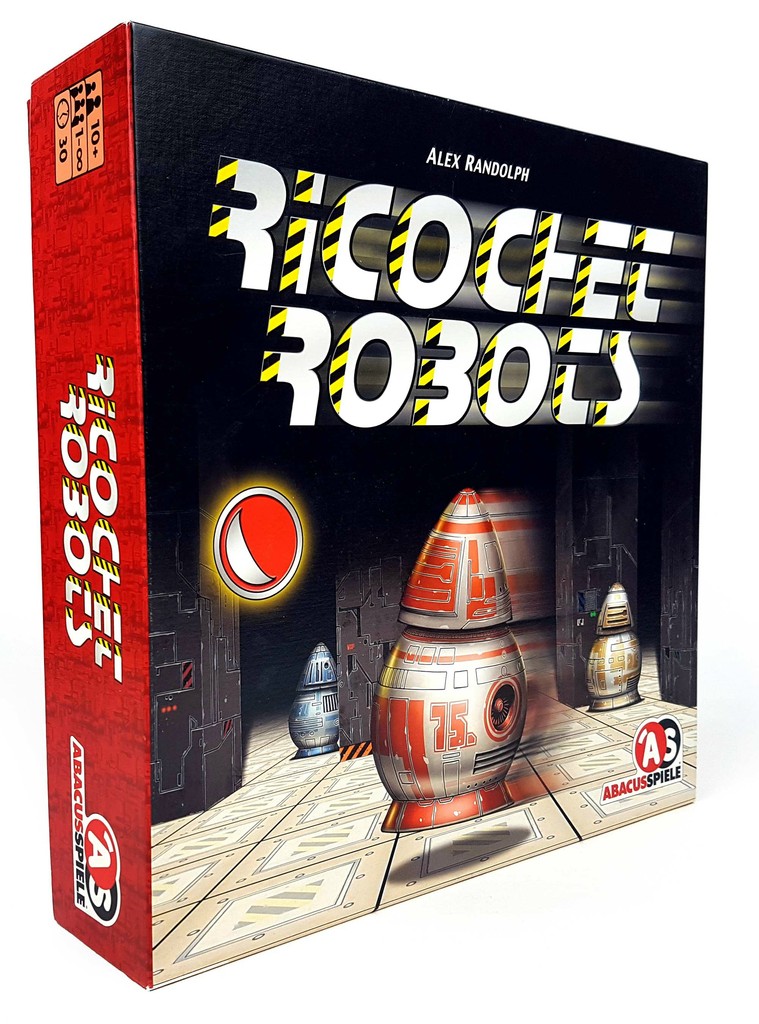
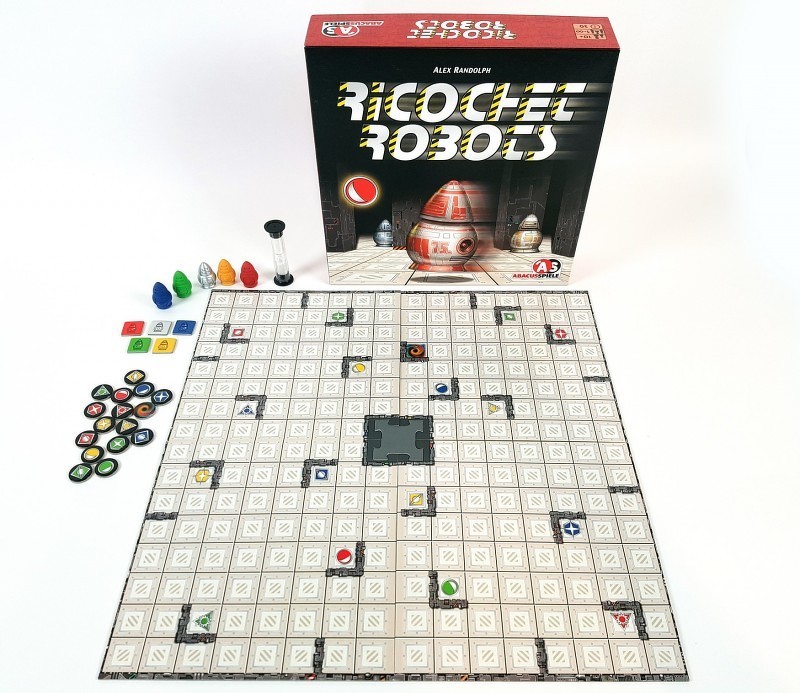
Ricochet Robots
Rompecabezas espacial de programación
Material
Tablero de juego, piezas de robot, paredes
Habilidades desarrolladas
Conciencia espacial, razonamiento lógico, coordinación y planificación, pensamiento matemático, memoria de trabajo, programación
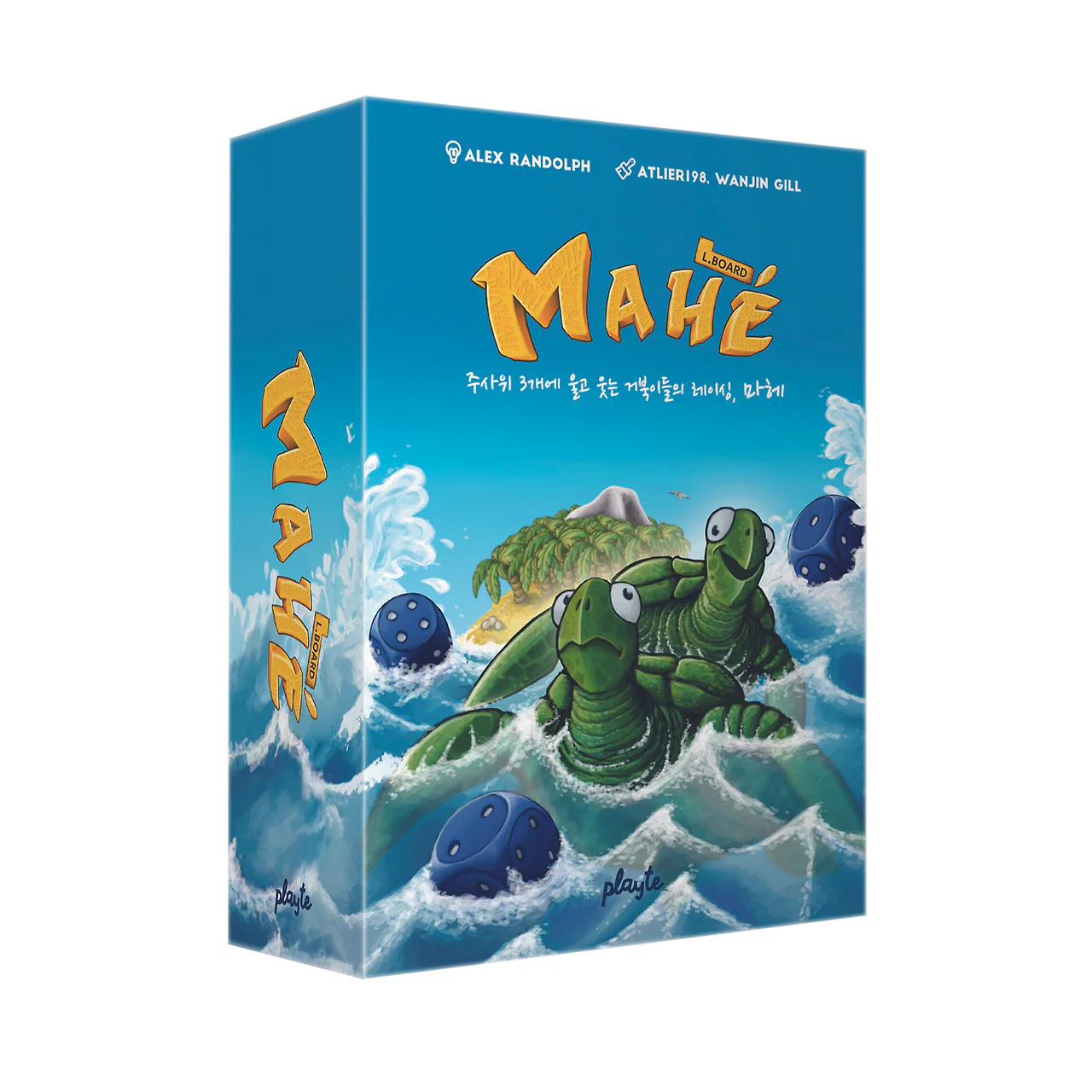
Mahé
Juego de apilamiento y carreras
Material
Tablero de juego, dados, piezas de jugador
Habilidades desarrolladas
Conteo, multiplicación, suma
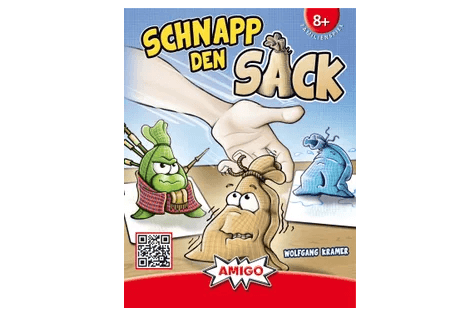
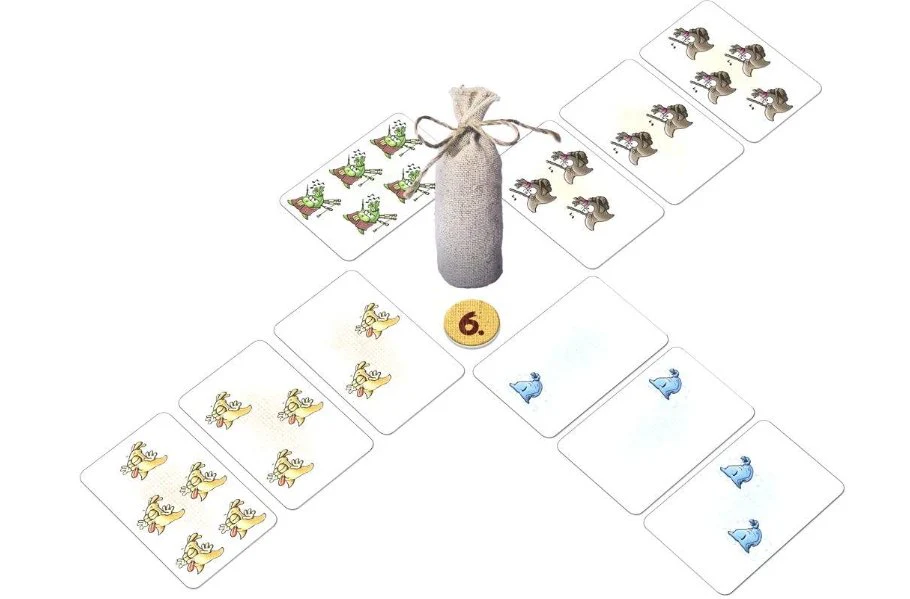
Schnapp den Sack
Juego rápido de contar y agarrar
Material
Cartas, bolsa
Habilidades desarrolladas
Suma, pensamiento estratégico, ordenamiento y comparación de números, conteo y comparación
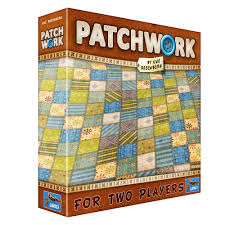
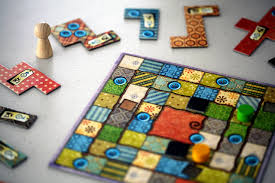
Patchwork
Patchwork es un juego para dos que combina el relajante arte del patchwork con jugabilidad estratégica.
Dos jugadores seleccionan y colocan por turnos parches de tela en su tablero personal, intentando cubrir el mayor espacio posible mientras gestionan sus botones.
Material
1 time board, 2 player boards, 33 fabric patches, 5 special patches, 1 neutral token, 50 button tokens, and a rulebook.
Habilidades desarrolladas
El juego potencia el razonamiento espacial, la gestión de recursos, la planificación estratégica y la toma de decisiones.
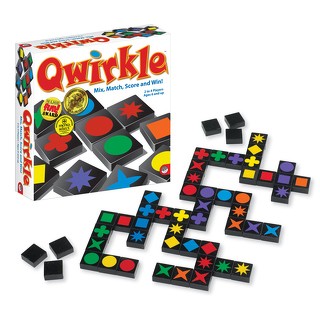
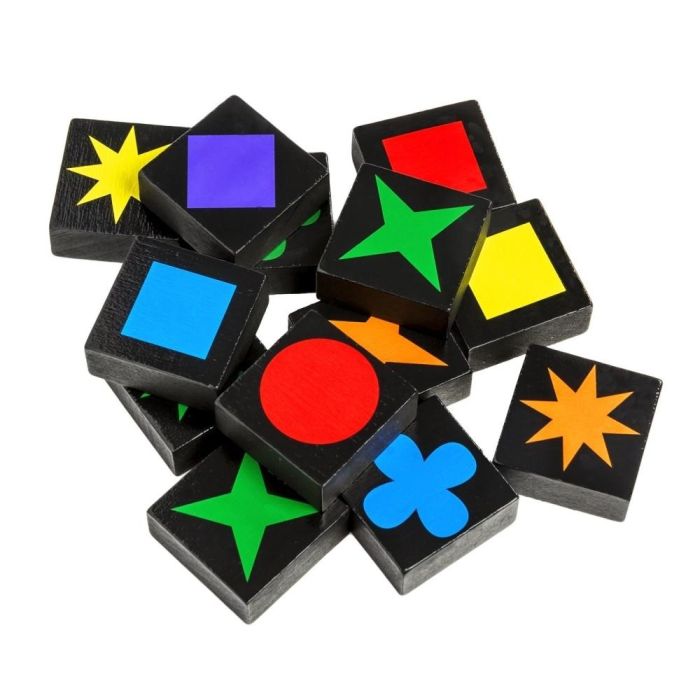
Qwirkle
¿Lo tomas o lo dejas? Eso es todo, pero cada decisión te hace sudar.
Los jugadores se turnan para colocar fichas en una cuadrícula compartida, combinando colores o formas en una fila o columna. Cuantas más fichas se coloquen en una secuencia, mayor será la puntuación. Un Qwirkle (un conjunto completo de seis fichas coincidentes) otorga puntos extra. El jugador con la puntuación más alta al final gana.
Material
108 fichas de madera con seis formas diferentes en seis colores diferentes.
Habilidades desarrolladas
Este juego mejora el reconocimiento de patrones, el pensamiento estratégico, la conciencia espacial y las habilidades de planificación, ya que los jugadores deben colocar fichas cuidadosamente para maximizar sus puntos.
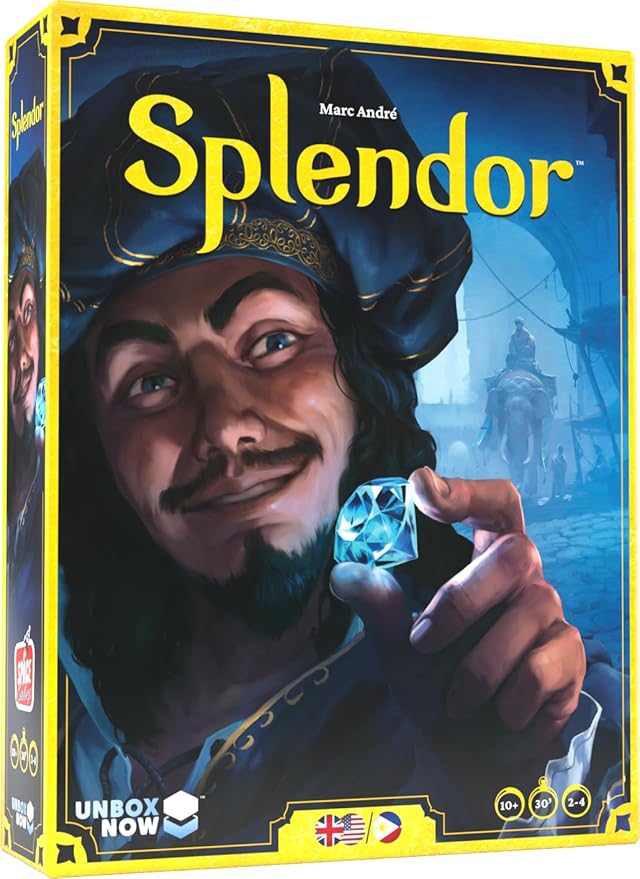
Splendor
Juego de comercio de gemas y construcción de motor.
Material
Gem tokens, development cards, noble tiles
Habilidades desarrolladas
Gestión de recursos, aritmética, conceptos económicos.
Tips for Using Math Board Games Effectively
Having the right game is only half the battle. How you introduce and play the game matters just as much. Here's our advice for different contexts:
For Parents at Home
-
Start with fun, not with learning goals. Pick a game because it's enjoyable, not because it "covers multiplication." If your child loves it, the math follows naturally.
-
Be patient. Motivation-based methods like board game pedagogy are slower than drill. They don't try to teach everything directly and immediately — they invite application, not memorization.
-
Allow mistakes. Board games build independent learning. Errors are part of the process.
-
Match the approach to the child. Review the three levels above and be honest about which one fits.
For Teachers in the Classroom
Using board games in a classroom setting requires different strategies than at home — managing groups, aligning with curriculum standards, dealing with mixed skill levels. We've written a comprehensive guide specifically for this: math board games for the classroom.
For Summer Practice
Summer is when math skills often regress. Board games are the perfect antidote — they keep mathematical thinking alive without feeling like homework. See our curated summer math game list for our specific recommendations on preventing summer slide.
Want Something Custom?
If you can't find the perfect game for your specific situation, consider making your own math board game. It's easier than you think, and the design process itself is a math exercise.
All Our Math Game Resources
This is our complete library of math game content. Each page goes deeper into a specific context or approach:
Math Games for the Classroom
30+ games organized for classroom use, with curriculum alignment tips.
Summer Math Game List
Prevent summer slide with these curated math game recommendations.
Math Card Games
Math games you can play with just a standard deck of cards.
65 Math Games for Adults
Our comprehensive list for older players and families.
Halloween Math Games
Seasonal math games for spooky holiday fun.
Educational Board Games Hub
Our parent guide covering all educational board game topics.
Frequently Asked Questions
Un posible recorrido
Con los juegos listados, tengo muchas buenas experiencias, pero seguramente hay otras excelentes opciones también. Si has repasado la lista anterior, es posible que algo en tu estantería también te haya venido a la mente, que podría ser bueno para desarrollar las habilidades matemáticas.
Con un poco de exageración, cada juego de mesa implica algún nivel de matemáticas. Si no es otra cosa, necesitas sumar los puntos. La clave es probar muchas cosas y prestar atención, porque si una dirección particular funciona con los niños, ese es el camino a seguir.
¡Buen viaje! Y lo más importante: ¡diviértete jugando!
Más recursos de juegos de mates
Sin spam, nunca. Cancela cuando quieras.
¡Comparte la diversión de aprender!
¿Te gusta nuestro contenido? Muestra tu apoyo compartiendo nuestra página con tus amigos y ayúdanos a inspirar a más familias y educadores con la alegría de aprender a través del juego. ¡Tus compartidos realmente hacen la diferencia. ¡Gracias por ser parte de nuestra maravillosa comunidad!