
Naturalmente, non esistono due bambini di 6 anni uguali, in termini di conoscenza, motivazione o cultura del gioco, ma ci sono comunque alcune considerazioni generali quando si scelgono i giochi per i bambini di questa età.
Credo che regole brevi e tempi di gioco brevi possano funzionare bene. Il vantaggio dei giochi facili da capire è che non passa molto tempo tra sedersi al tavolo e iniziare a giocare. Il breve tempo di gioco è vantaggioso perché se il gioco non funziona, non abbiamo investito molto tempo; se perdono ma gli è piaciuto, possiamo giocare di nuovo velocemente dove potrebbero vincere; e se lo amano, possono spesso sperimentare la gioia che porta.
Per i bambini più piccoli, i componenti del gioco sono importanti tanto quanto lo sono per un collezionista esperto con una seria passione per i giochi. Dovrebbe adattarsi alla vita quotidiana del bambino, essere veramente simile a un giocattolo, di buona qualità e preferibilmente con elementi di gioco grandi e carini.
Come genitori o educatori che scelgono un gioco, pensiamo immediatamente alle opportunità di sviluppo, ma queste dovrebbero essere secondarie o abilmente integrate nel gioco, poiché il nostro obiettivo primario è invogliare loro a giocare, e il resto seguirà naturalmente.
Tre abilità essenziali che i giochi da tavolo possono migliorare nei bambini di 6 anni includono:
Abilità motorie fini
Lanciare i dadi e afferrare i pezzi fa parte di questo, ma lo è anche la disposizione di tutti i tipi di componenti. Le capacità motorie e la coordinazione occhio-mano possono svilupparsi in modo impercettibile e divertente. Solo abilmente!
Interazione di gruppo
Non abbiamo nemmeno bisogno di un gioco da tavolo cooperativo per questo, perché semplicemente sederci insieme per un gioco, seguendo le sue regole, prestando attenzione gli uni agli altri e facendo a turno, garantisce lo sviluppo delle nostre capacità cooperative.
Abilità matematiche di base
Una delle caratteristiche più comuni dei giochi da tavolo è che il gameplay si basa su quantità e numeri, quindi i concetti di numeri e conteggio possono essere facilmente sviluppati, rafforzando le basi matematiche.
Niente spam, mai. Cancellati in qualsiasi momento.
Negozio PlayWise
Stampa e gioca a giochi da tavolo, pagine da colorare scaricabili, materiale didattico

Passiamo ora ai giochi specifici per i bambini di 6 anni

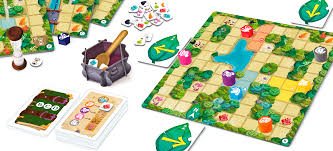
Magic Maze Kids
This is an engaging cooperative game adapted from the famous Magic Maze game but designed specifically for children.
Strumenti
1 modular game board, 4 hero pawns, 4 action tiles per player, 1 sand timer, 1 instruction manual, and various tokens for objectives and challenges.
Competenze sviluppate
The game enhances cooperation, problem-solving, spatial awareness, and communication, as players must work together silently to guide their heroes through the maze.
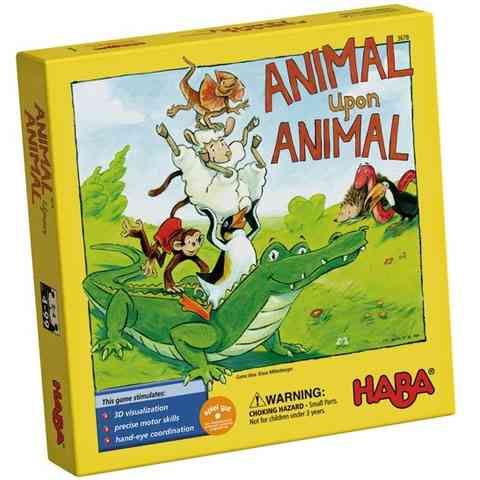
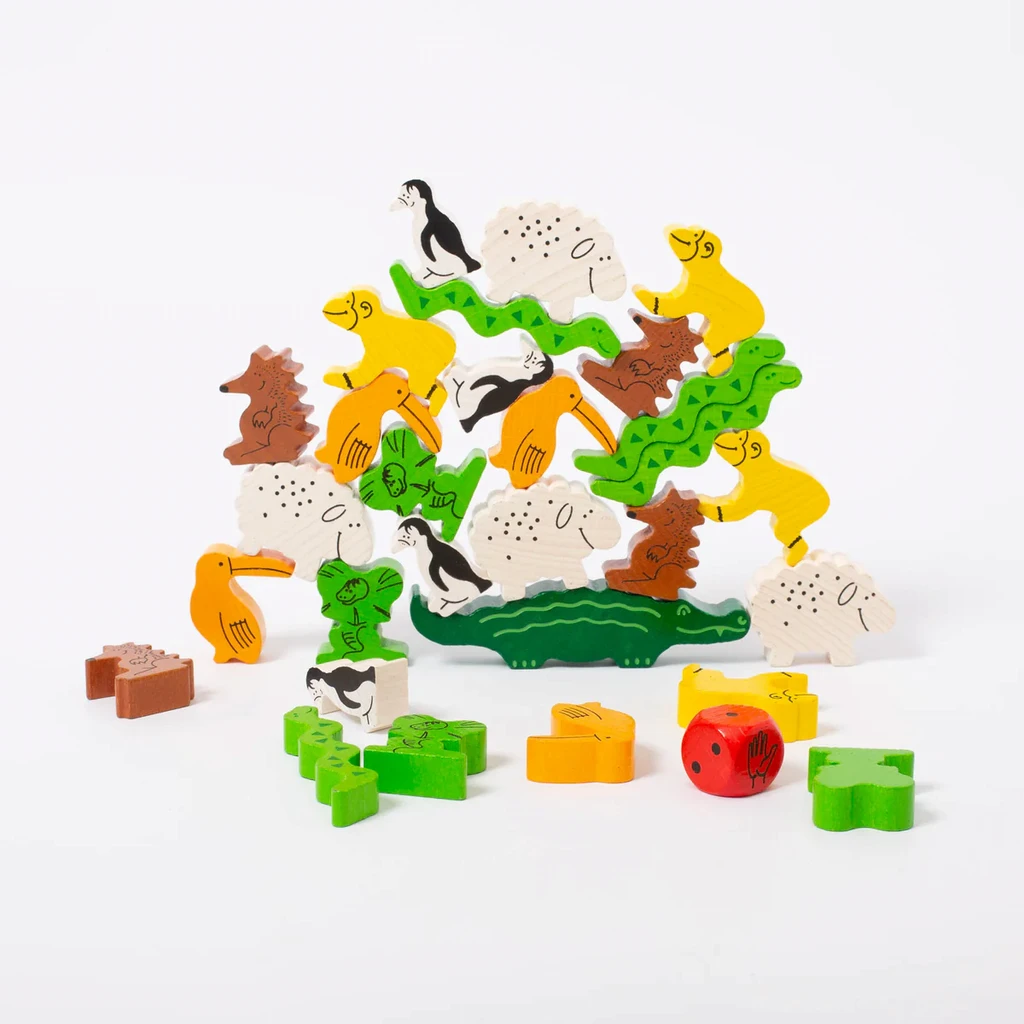
Animal Upon Animal
A delightful balancing game that calls for players to balance different wooden animals on top of one another.
Strumenti
29 wooden animal figures, 1 wooden die, and a rulebook.
Competenze sviluppate
The game enhances fine motor skills, hand-eye coordination, patience, and strategic thinking, as players carefully stack animals without toppling the tower.


Bugs in the Kitchen
A dynamic board game featuring a small, vibrating hexbug that players must guide into their traps by creatively turning cutleries set up in a maze.
Strumenti
1 HEXBUG Nano robotic bug, 1 game board with rotating utensils, 24 utensil pieces, 18 bug tokens, 1 die, and a rulebook.
Competenze sviluppate
Problem-solving, strategic thinking, hand-eye coordination, and quick decision-making

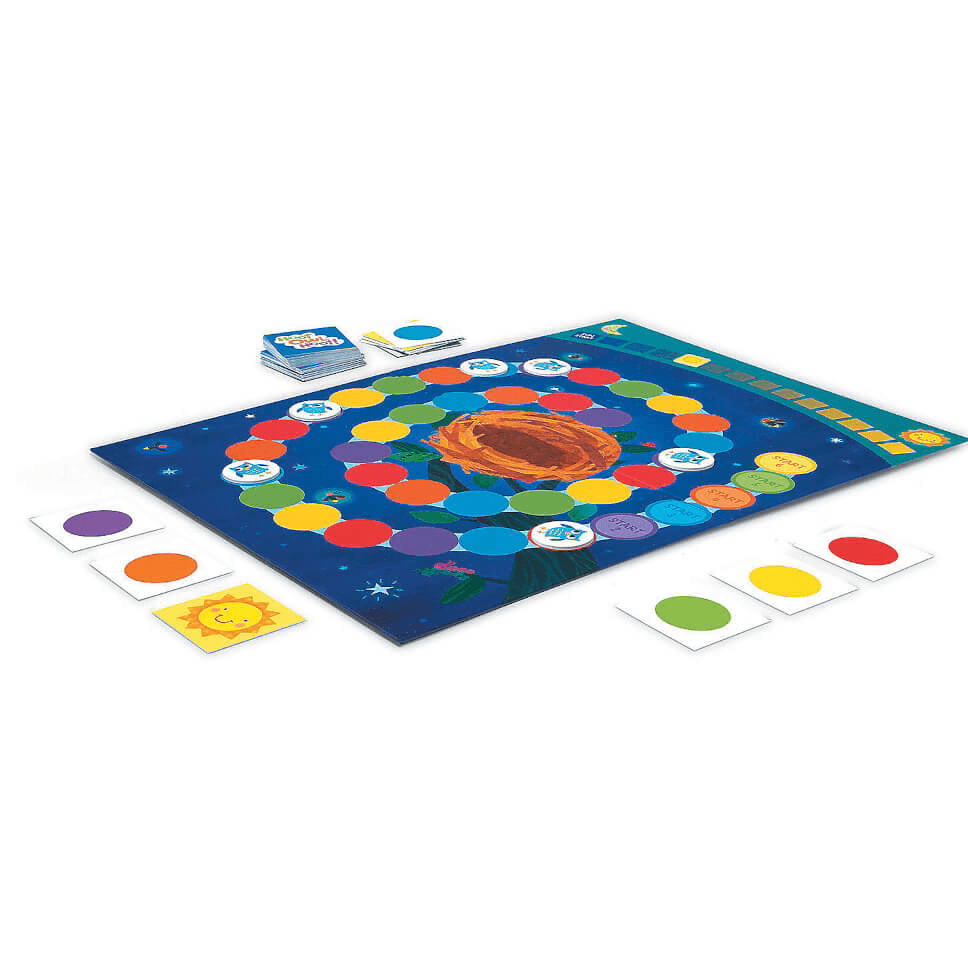
Hoot Owl Hoot
A cooperative colour-coded board game where players work together to help the owls fly back to their nest before the sun comes up.
Strumenti
1 game board, 6 owl tokens, 50 color-coded cards, and a rulebook.
Competenze sviluppate
Cooperation, color recognition, strategic thinking, and turn-taking skills
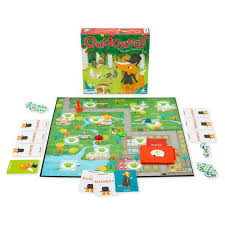
Outfoxed!
A cooperative deduction board game where players work together to discover which fox stole Mrs Plumpert's prized pot pie.
Strumenti
1 game board, 16 suspect cards, 16 thief cards, 12 clue markers, 4 detective pawns, 1 evidence scanner, 3 custom dice, and a rulebook.
Competenze sviluppate
Logical reasoning, deduction, teamwork, and problem-solving skills


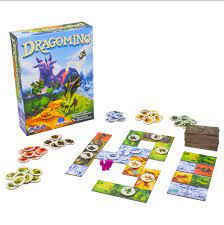
Dragomino
An enchanting, kid-friendly adaptation of the popular game Kingdomino.
Strumenti
28 domino-style terrain tiles, 69 dragon egg tokens, 4 starting tiles, 4 explorer pawns, and a rulebook.
Competenze sviluppate
Pattern recognition, spatial reasoning, decision-making, and basic strategic thinking

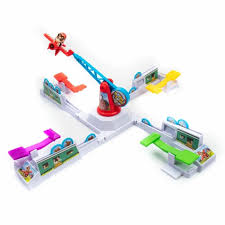
Loopin' Louie
A fast-paced and energetic board game that requires players to protect their chicken chips from Louie's swooping and loop-de-looping airplane.
Strumenti
1 motorized airplane unit with Louie figure, 1 rotating arm, 4 player paddles, 12 chicken tokens, and a rulebook.
Competenze sviluppate
Hand-eye coordination, reaction speed, fine motor skills, and timing
Niente spam, mai. Cancellati in qualsiasi momento.
Diffondi il divertimento dell'apprendimento!
Ti piacciono i nostri contenuti? Mostra il tuo sostegno condividendo la nostra pagina con i tuoi amici e aiutaci a ispirare più famiglie ed educatori con la gioia di apprendere attraverso il gioco! Le tue azioni fanno davvero la differenza. Grazie per essere una parte meravigliosa della nostra comunità!