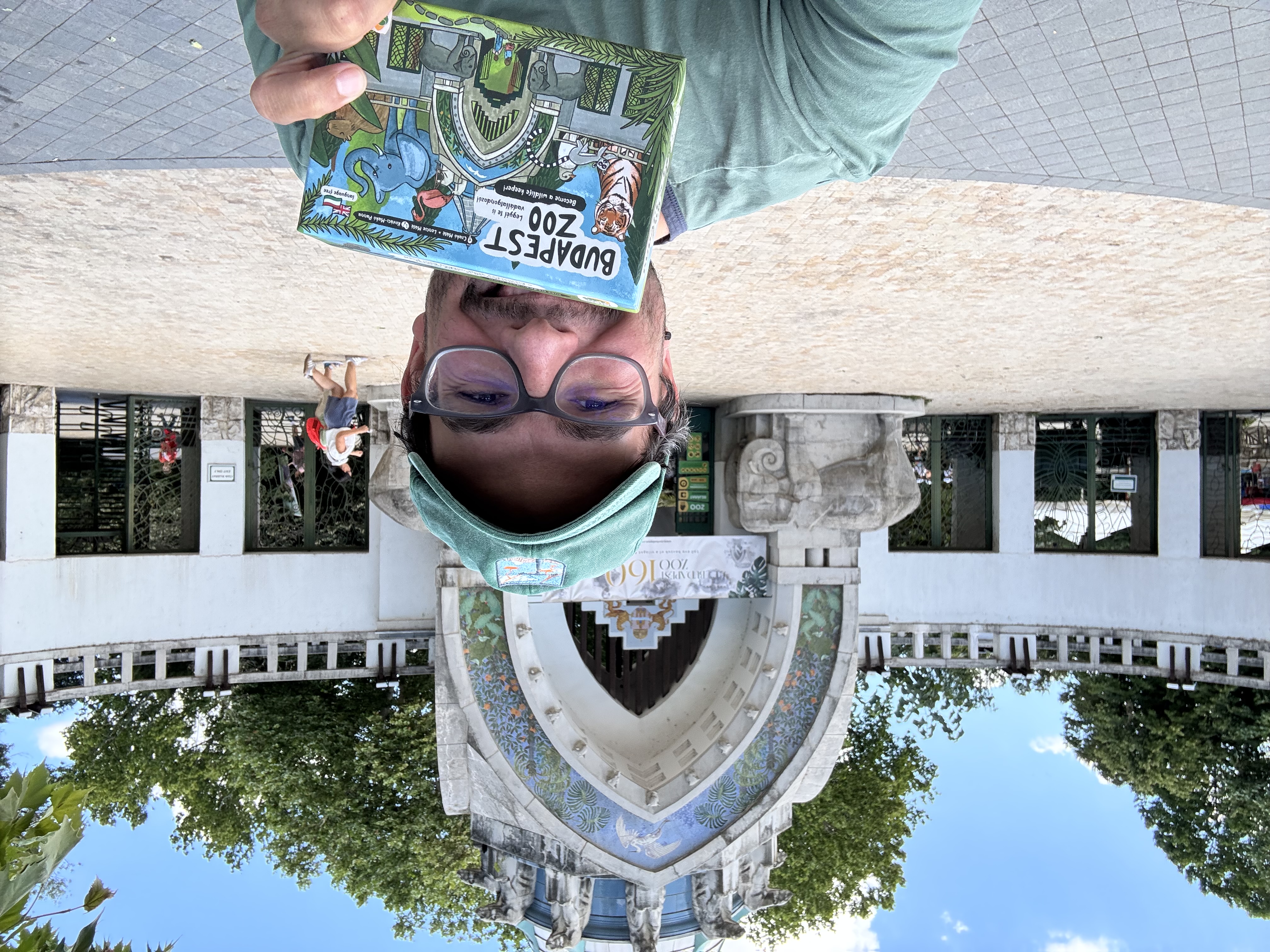
I’m sorry, but I don’t know. Or rather, I’m almost certain there’s no exact answer to this question. I’ve already explored the topic in a longer article, but it recently came up again because of a lovely family story—one I’d like to share with you here on the blog.
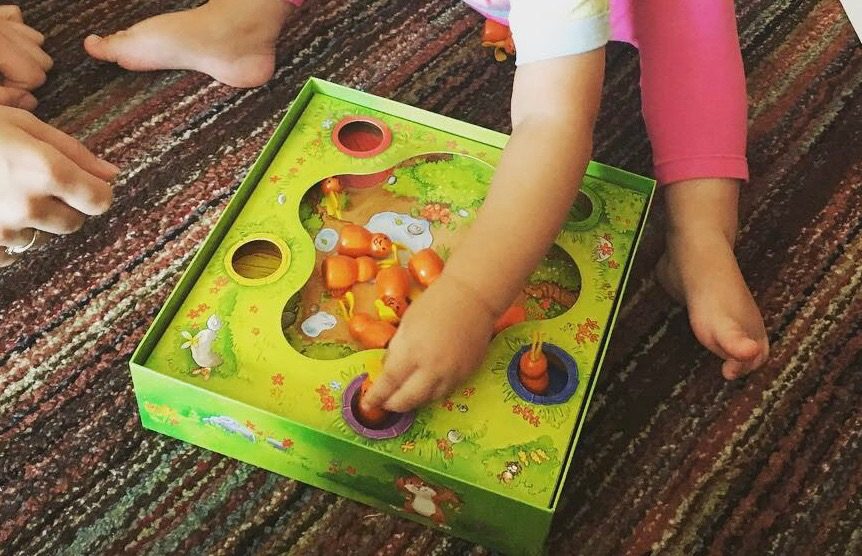
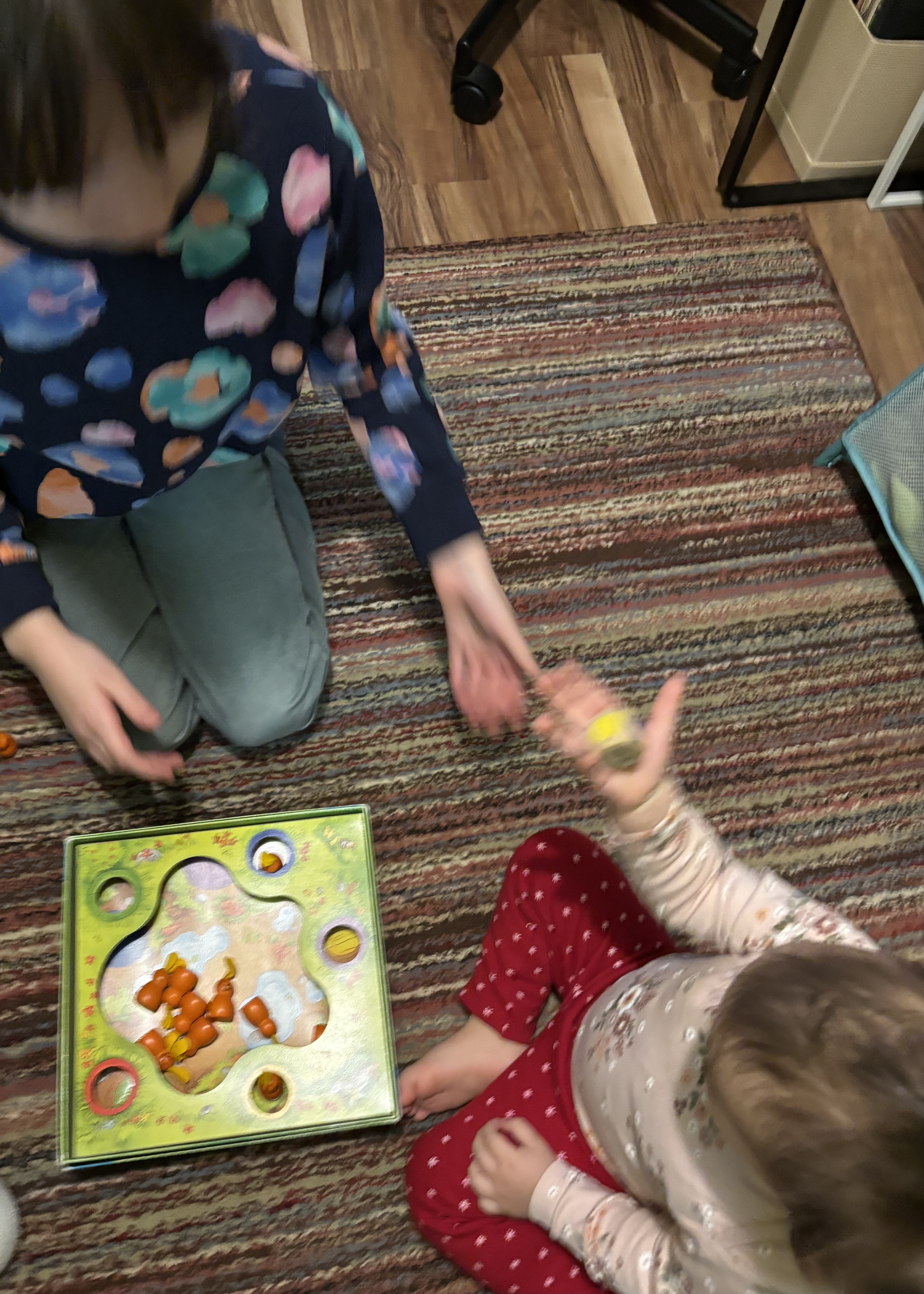
So my younger daughter just turned one and a half, and I remembered that her older sister was already playing Hopp Hopp Haschen at that age, so I took the game off the shelf. For now, like a proper toddler, all she really does is take games down from the shelves and pull them apart. I figured we might as well see how far we still are from actually playing board games together.
I know my daughters well enough that what I experienced didn’t surprise me at all. With very close guidance, we managed to get through six or seven rounds of the game fairly smoothly, but she didn’t really grasp the color matching, how the die works, or the idea of collecting the bunnies—and after a while, that became quite frustrating for her. First the dice rolling just got wilder, then the whole thing turned into general flailing, and we decided to stop.
And yet she’s growing up surrounded by hundreds of board games, just like her sister did. She sees us play all the time; she even watches her older sibling play. But because her temperament is completely different, she’s simply not ready for the same game at the same time her sister was. And that’s not just normal—it’s actually something very beautiful.
So no, I don’t know when you can start playing board games with a child, because it depends on the child. We should pay attention, try to understand them, offer opportunities—and the answer will reveal itself. There are board games made for children as young as one and a half today, and it’s perfectly fine to experiment the way we did, but there’s no need to force anything. Let everything move forward loosely, naturally.