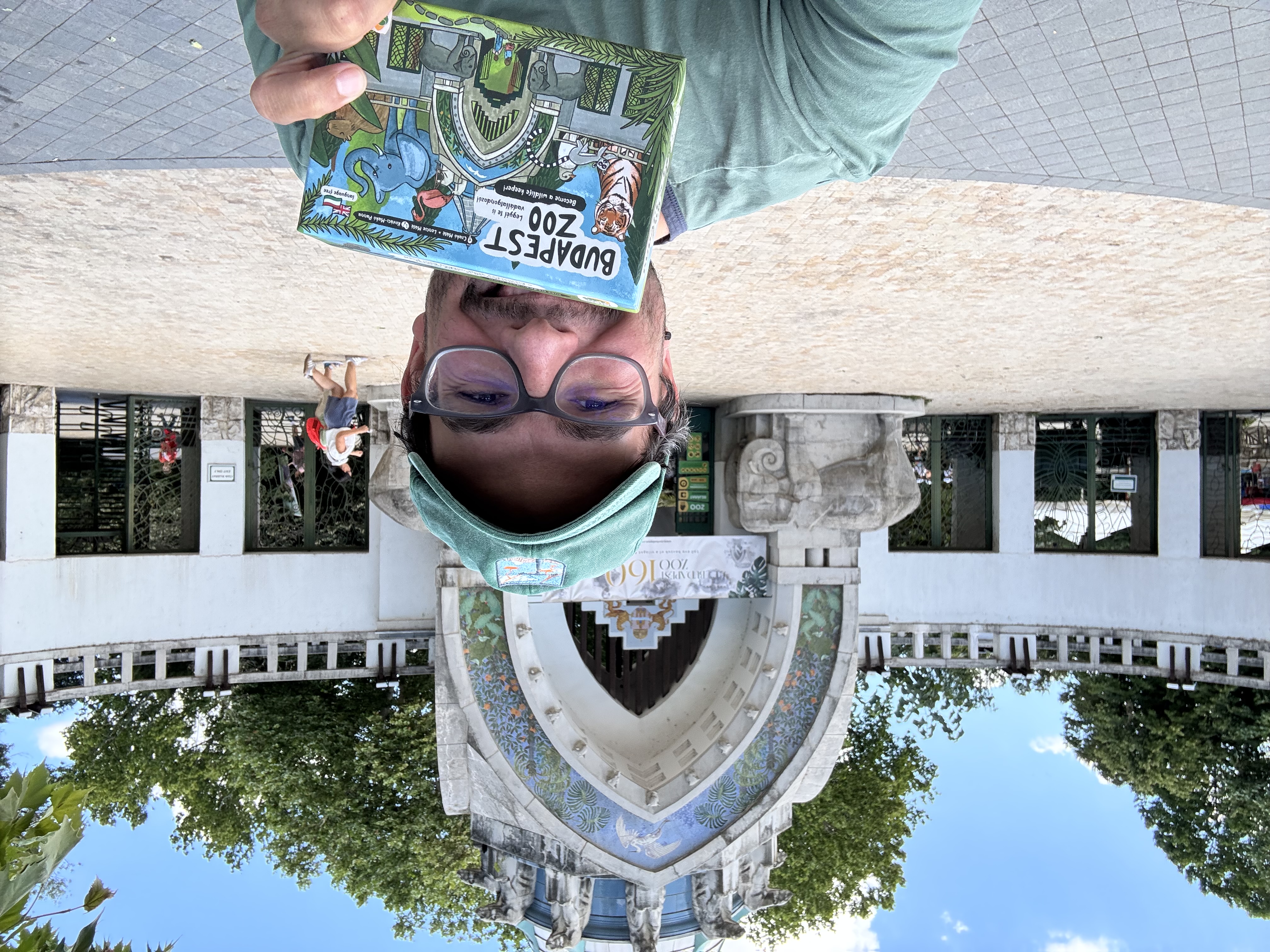
Over the past few weeks, my work has taken me to quite a few kindergartens in connection with board games. I designed board games together with preschoolers, gave presentations to kindergarten teachers and parents about the educational value of board games, and also held the in-person session of a blended training course for a community of kindergarten teachers.
Although I do not have a degree in early childhood education, for several years I designed and led activities for preschool-aged children in the learning center I directed, often with a strong board game focus, so I do have practical experience in this field.
The goal of the game design workshop was to connect to Earth Day programs and, within 60 minutes, come up with some kind of playable game idea and even begin creating it. As preparation, I only asked the children to assemble a collection of recycled materials: dice, cards, and all sorts of objects that could be used as pawns or markers. I myself prepared with the topic of selective waste collection, and after a short conversation we began creating cards (trash items, bins) and brainstorming what kinds of games we could make from the available materials.
I had the opportunity to work with three different groups, and all three managed to create games and even begin building and testing them. Two of the projects ended up being fairly similar, while one turned out completely differently from the others. Overall, it was a fantastic experience. I had never done anything quite like it before, and I was honestly a little nervous about whether we would manage to achieve anything meaningful in such a short time. But we did. More than that, actually.
Giving presentations simultaneously to parents and educators is always exciting. I got everyone moving with a round of Happy Salmon, and by analyzing the game together we ended up with a highly interactive session. Participants’ familiarity with games — especially modern board games — varied greatly, which in itself shows that, golden age or not, we still have a huge amount of work to do if we truly want to bring the world of modern board games to broader audiences, and with it board game pedagogy as well, because the latter cannot really exist fully without the former.
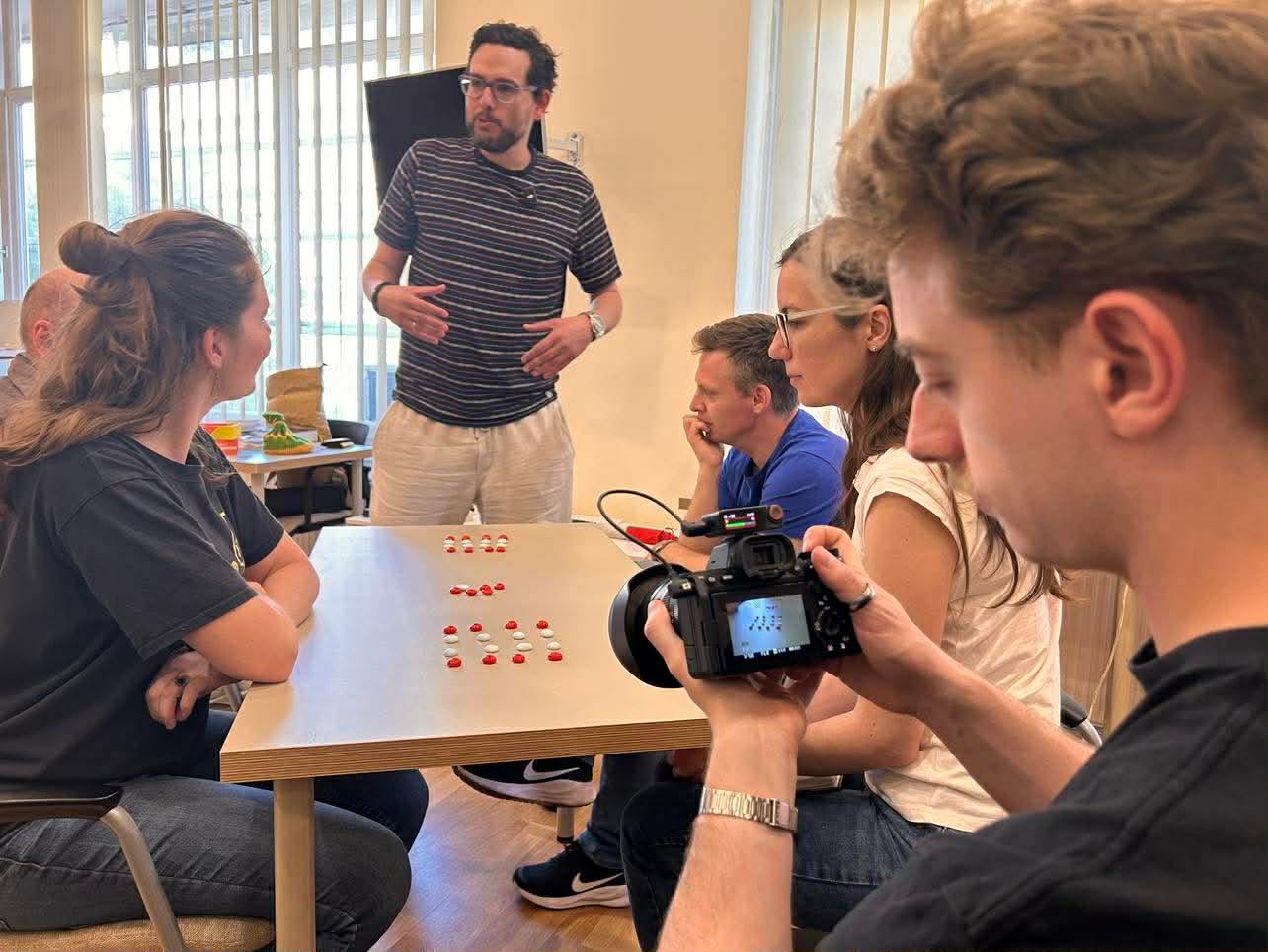
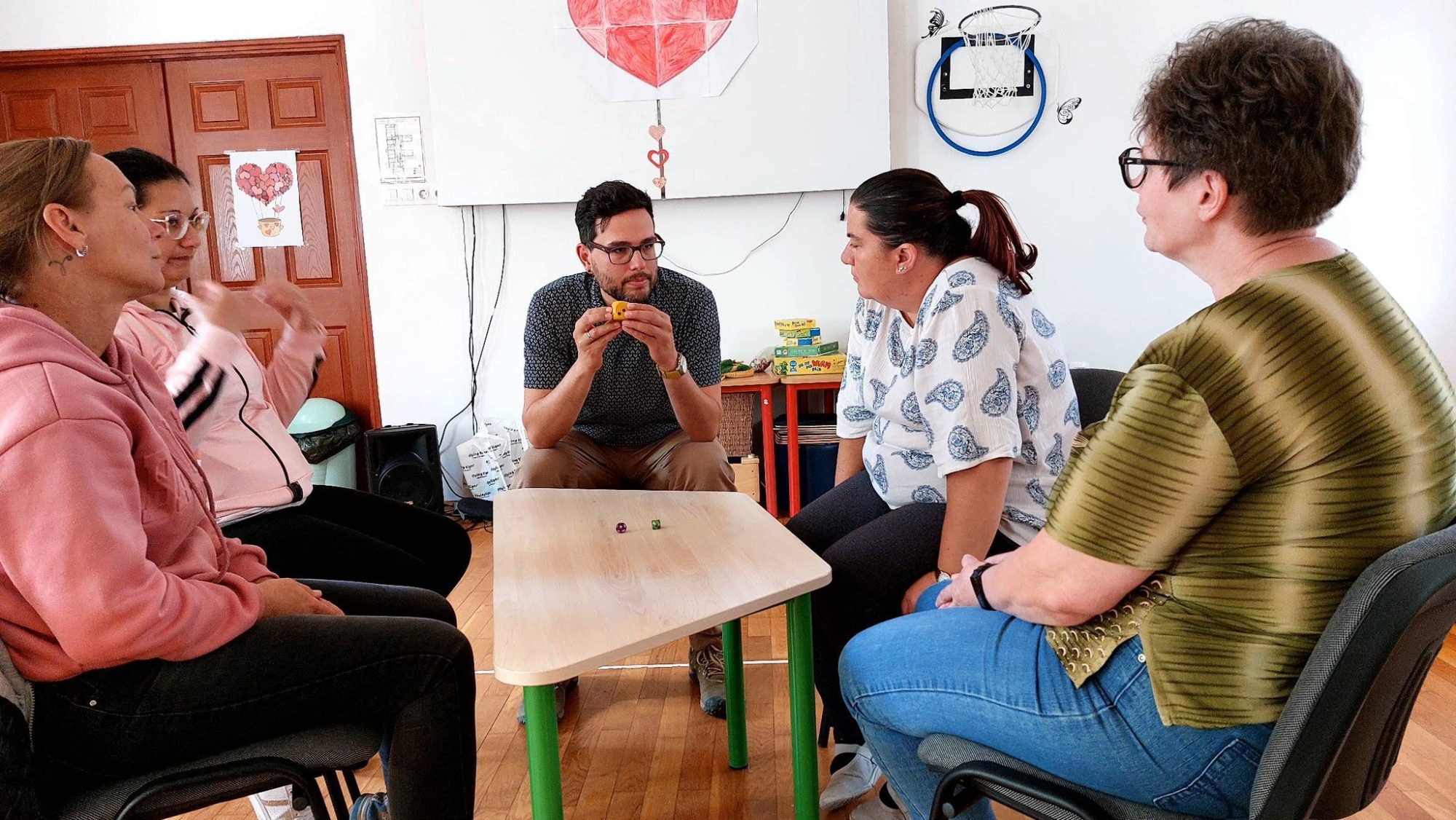
Of course, what I enjoy the most is having enough time. In a tiny village with only a few hundred residents — but with an exceptionally well-equipped kindergarten — I had the chance to hold a full-day session for a five-person teaching team, accompanied by access to our 30-hour e-learning course. The topics of the day included: the basic principles of board game pedagogy; low-component games; introducing and building game culture; modern children’s games; rule explanation and balancing opportunities; cooperative board gaming; building a board game collection; and taking the next step into modern board games.

Out of the many interesting moments, one thing stood out especially to me: the team mostly used board games only with middle and older kindergarten groups — and even there, not very often. I think one of the most exciting developments in recent years is that there are now genuinely worthwhile and exciting board games available even from the age of 2–3. This does not mean that every three-year-old child is developmentally ready for rule-based games and board gaming, of course. But there is now an opportunity to try these activities, and if they work for a child, they can offer wonderfully varied experiences.
I can see this even with my own children: they mature for these kinds of activities at very different times and in very different ways. But excluding the possibility altogether is definitely a mistake.