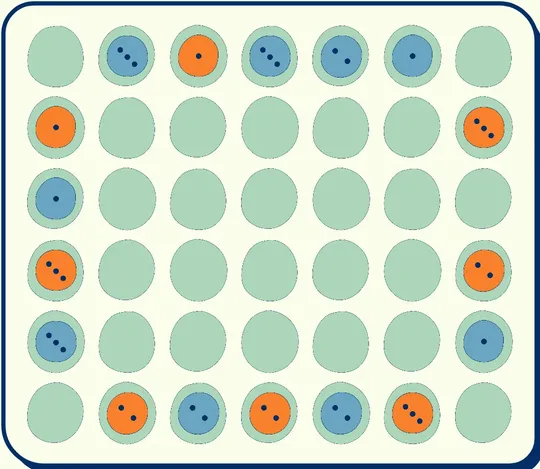
Chess is not the only abstract game — and it's far from the best entry point for kids. This article, part of our educational board games guide, shows where it's actually worth starting: games you can set up with a handful of pebbles in a minute (Nim, Lahti, Neutron), the great classics (Mancala, checkers, Go), and how you eventually arrive at modern gems like Santorini, Quarto, and Azul — plus an honest word about Hive and Onitama.
우리가 충분히 똑똑하지 않은 걸까요?
부모님들로부터 가장 많이 들은 말이 무엇인지 모르겠을 정도입니다:
"저는 체스를 할 만큼 똑똑하지 않아서요..."
"아이들이 체스를 하면 좋겠지만, 우리 아이들에게는 너무 복잡해요..."
"왠지 체스 같은 게임은 아이들에게 충분히 흥미롭지 않은 것 같아요. 별다른 일이 일어나지 않으니까요."
먼저 체스가 유일한 선택지가 아니라는 점을 인정하는 것부터 시작합시다. 집에서 하기 좋고, 다루기 쉬우며 간단한 짧은 게임들이 아주 많습니다. 그리고 이런 게임들에는 각각 그보다 더 발전된 형태의 게임이 존재합니다. 그러니 처음부터 가장 복잡한 게임으로 뛰어들 필요는 없습니다. 더 단순하고, 더 짧고, 위험 부담이 적은 형태로 아이들과 우리의 한계를 실험해 볼 수 있습니다.
발전은 억지로 노력한다고 되는 것이 아닙니다. 자연스럽게 이루어지는 것이죠. 아이가 성장함에 따라 게임도 점차 더 복잡해질 수 있으며, 우리는 아이들과 가능한 한 오랫동안 함께 할 수 있습니다. 아이들이 우리의 실력을 뛰어넘더라도 두려워하지 맙시다. 사실 그것이 우리가 원하는 바가 아닐까요?
시간이 없나요? 돈이 없나요?
네, 그것도 문제입니다. 비싸고 어려운 것을 샀는데 나중에 할 시간이 없다면 어떨까요? 이상적으로는 아이들이 학교에서도 집에서도 게임을 많이 하는 것이 좋으며, 부모가 집에서 놀이에 동참하는 것은 매우 중요합니다.
물론 아이가 체스 클럽에 다니면 좋겠지만, 놀이가 중요한 구성 요소가 되는, 집에서 부모와 함께 보내는 질 높은 여가 시간은 그 무엇으로도 대체할 수 없습니다. 다행히 길고 복잡한 게임만 스마트한 것은 아닙니다. 간단한 도구 몇 개만 있으면 배우기 쉽고 플레이하기 쉬운 게임을 집에서 금방 만들 수 있습니다.
What is an abstract game, really?
Many people don't even realize how many abstract games they already know. If you've ever played Tic-Tac-Toe in a grid notebook at school, pushed pieces across a checkers board, or played a round of Nine Men's Morris, you've been in this world for years. And plenty of people would never suspect that Azul, a modern favorite in so many homes, is an abstract game too.
We call a game abstract when it has no theme. It typically asks for logical or strategic thinking, it's mostly played by two, it leaves luck out, and every piece of information is visible and available to both players. Game theorists call this last part "perfect information" — but you can simply think of it as a game with no secrets: no hidden cards, no dice, nothing up anyone's sleeve.
There are classic counterexamples, of course. In dominoes, we draw tiles; in backgammon, we roll dice. And among the modern abstracts, Azul happily uses luck and plays well with more than two people. The borders are soft — and that's perfectly fine.
Why are abstract games so good for development?
The baseline answer is well known: abstract games train concentration, planning, pattern recognition, and strategic thinking. All true. But our angle is a little different, and it comes from practice, not from lists — because the more interesting questions are why children fall for these "boring" games when they meet them the right way, and what exactly a theme-less game does that a themed one doesn't.
추상 게임은 왜 지루하다고 여겨질까요?
화려하지 않아서가 아닙니다. 적절한 시기와 상황에서 접하지 못했기 때문입니다. 첫 번째도, 두 번째도, 그리고 수십 번째에도 말이죠.
저는 300명이 넘는 사람들에게 칼라하(Kalah)를, 최소 200명에게 인터내셔널 체커(International Checkers)의 규칙을 가르쳤지만, 단 한 명의 성인이나 아이도 이를 거부한 기억이 없습니다. 오히려 그들이 게임을 배웠을 뿐만 아니라 직접 구매해서 계속 플레이하고 있다는 이야기를 자주 듣습니다. 이 두 게임은 제 교육 세션에도 정기적으로 등장합니다.
취약계층 가족의 졸업 파티에 참석했을 때 한 학생이 칼라하를 꺼내어 몇 라운드 플레이하는 모습을 보았을 때의 기쁨을 상상해 보세요. 이것은 마법이 아닙니다. 게임 자체가 해낸 일이죠. 중요한 것은 무엇을, 언제, 어떤 순서로 게임을 활용할지에 대한 의식적인 구축의 문제입니다.
Games that ask to be solved
My own path in board game pedagogy says a lot here. I arrived from the direction of modern board games, because I felt education was focusing almost exclusively on the "smart" games — chess above all, maybe checkers and Nine Men's Morris — while there's an enormous amount of developmental potential even in silly party games. For years I worked on hiding the learning inside play, mostly with disadvantaged children who were hard to motivate.
Then something interesting happened: it turned out that many of these kids are drawn precisely to simple, clean structures — Kalah, International Checkers, Nim, Lahti, Neutron. An abstract game asks you, quite openly, to crack it. A good modern board game invites you to play with it; a classic abstract game also wants to be figured out. It stands in front of you bare — just the position, the decision, and the consequence. There's no story to hide in: the brain has to work with the pure structure.
It's a fascinating experience to understand perfectly how Go works and still not be able to make it work, because putting every building block in the right place is desperately hard. So "hide the learning" is not a universal truth after all. Sometimes what moves a child forward is the opposite: putting the difficulty right in front of them — this is hard, and it wants to be solved. Think of puzzle locks: they annoy everyone to death, yet everyone keeps picking them up. Or the most famous Hungarian invention, the Rubik's Cube, which everyone owns and far fewer can solve. A more conscious learning situation can be the more effective one — as long as it doesn't paralyze the learner. That's the balance we're always weighing.
If you're curious about the broader picture — what board games do to a developing mind — we've collected the research and our classroom experience in a separate piece on the developmental impact of board games.
왜 발달을 위한 시간이 필요한가요?
때때로 교육자나 부모들 사이에서도 조급함이 생깁니다. 다른 아이가 이미 알고 있어서, 혹은 우리 아이도 알 수 있을 것 같아서, 또는 교육과정상 더 이상 이 단계에 머물러서는 안 된다는 이유로 당장 모든 결과를 원하곤 합니다.
하지만 아이들은 각자의 길을 걷고 있으며, 우리는 다정하고 겸손하게 그들을 도울 수 있습니다. 큰 문제가 없다면 굳이 스트레스를 받을 필요는 없습니다. 5~6살 아이가 엘로(Elo) 레이팅 2000이 넘는 체스 선수들과 경쟁하지 못한다고 해서 큰 문제가 되는 것은 결코 아닙니다.
배움은 리듬이나 동기를 찾는 과정을 포함하는 하나의 여정이며, 다양한 게임은 이를 훌륭하게 지원할 수 있습니다. 배우기 쉽고 짧은 게임일 때 가장 쉽게 여러 게임을 플레이해 볼 수 있습니다. 2분짜리 짧은 게임만으로도 부모나 교육자는 아이들이 즐거워하는지, 더 깊이 파고들 가치가 있는지, 그리고 올바른 길의 시작점을 찾았는지 파악할 수 있습니다.
The progression ladder: which game at what age?
What I recommend first depends on a great many things. But if I can choose, Nim, Lahti, and Neutron are what I show first: pebbles, perhaps a tiny board — and you still have to think. They show beautifully what the world of abstract games is about, yet they can be learned and cracked quickly.
As for ages: labels on boxes usually say 6+ or 8+, but with abstract games the rulebook is rarely the obstacle. Their rules are often simpler than those of the board games recommended for young kids — what's challenging is not understanding the rules but operating what grows out of them. So when starting out, I only really watch one thing: length. Choose short games first. Mancala isn't even that short, and I've still taught it to preschoolers countless times — but Nim or Neutron are the safer first calls.
| Stage | Age guide | Games | Why these |
|---|---|---|---|
| First moves | 4–6 | Tic-Tac-Toe, Nim, Lahti (miniature checkers), Neutron | A handful of pebbles, a tiny board, rules in a minute — and 6–8 rounds fit into 15 minutes. |
| Building confidence | 6–9 | Kalah (Mancala), Gomoku, Quarto, Quoridor, Blokus, Santorini (base game) | Familiar ideas with one new twist at a time; short games with real decisions. |
| Going deep | 9+ | International Checkers, Go (9×9), Onitama, Hive, Azul, Twixt, YINSH (GIPF project) | Depth that rewards practice — these can stay with you for decades. |
Take the ages loosely. And don't be afraid of the "smart" games: notice how few rules checkers or Nine Men's Morris actually has. Even chess doesn't have many rules — it just has many kinds of pieces and a long playing time.
The next four chapters walk this ladder game by game: line-winning games, checkers, the pebble-counting family — and the variations that keep all of them fresh.
틱택토와 선을 잇는 게임들
전 세계적으로 저평가된 게임들이 많은데, 틱택토(Tic-Tac-Toe)도 그중 하나일 것입니다. 보드게임긱(BoardGameGeek) 목록에서 평균 2.7점을 받아 25,000위 안에도 들지 못하죠. 고모쿠(오목)의 평점은 5.9점에 불과하지만 난이도는 틱택토의 1.28에 비해 1.85이며, 플레이 시간은 1분에서 5분으로 늘어납니다. 그리고 이것이 바로 우리가 찾고 있는 것입니다.
틱택토는 플레이 공간이 제한되어 있고 말의 수도 유한하여 파악하기 쉽기 때문에 미취학 아동에게 훌륭한 게임입니다. 대각선, 수직 또는 수평으로 세 개의 말을 나란히 놓는 것이 목표입니다. 두 플레이어가 번갈아 가며 진행하고 누군가 금방 이기게 되는데, 게임을 이해했다면 그 승자는 아마 선공 플레이어일 것입니다.
오목(Gomoku)은 보드가 더 크고 서로 옆에 놓아야 할 말의 수가 더 많습니다. 게다가 정사각형 격자 위에 연필로 동그라미와 엑스를 그리며 플레이할 수도 있죠. 저도 학교 책상 밑에서 몰래 즐겼던 흥미진진한 기억이 많이 있습니다.
여기서 한 번 더 비틀어 볼 수도 있습니다. 'Tőtikék'(헝가리어로 행을 채워야 함을 의미)는 놓여진 돌이나 말이 화살표 방향으로 미끄러지다가 장애물(보드의 가장자리나 다른 돌/말)에 부딪힐 때까지 이동하는 선 잇기 게임입니다. 따라서 종종 오랫동안 공을 들여야만 원하는 곳에 돌을 놓을 수 있고, 그동안 상황은 끊임없이 변화합니다.
이처럼 아이들과 함께 유치원 때부터 틱택토를 플레이할 수 있고, 우리만의 귀엽고 특별한 세트를 만들 수도 있습니다. 여기서부터 더 복잡한 선 잇기 게임으로 넘어가는 것은 발달 과정을 편안하게 따라가는 매우 쉬운 일이 될 것입니다.
And if your child is most easily won over by a modern, colorful box, Quarto is my choice from this family: a line-winning game with a twist, a close relative of Tic-Tac-Toe, so it feels instantly familiar. The twist that makes it special: the piece you place is chosen by your opponent.
2x5 또는 10x10
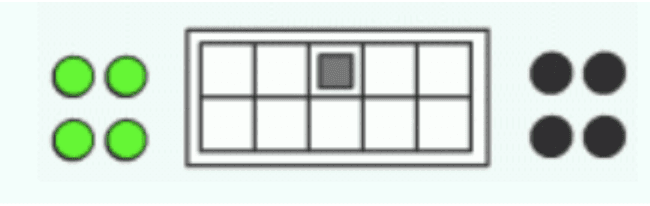
많은 분들이 모르실 수 있지만, 약간 과장해서 말하자면 체커는 어떤 크기의 보드에서든 플레이할 수 있습니다. 제가 아는 가장 단순한 형태는 라티(Lahti)입니다. 각각 5개의 칸으로 된 2개의 행이 있고, 중간에 있는 두 칸 중 하나에 왕관 같은 표시가 있습니다. 교대로 각자의 4개의 말을 놓고 전투를 시작합니다. 상대의 말을 모두 잡아내거나, 내 말이 하나만 남았더라도 왕관이 표시된 칸에 들어가면 승리합니다.
이동은 옆이나 대각선으로 할 수 있고, 가능하다면 잡기는 필수입니다. 상대 말 뒤에 빈 공간이 있다면 뛰어넘어 상대를 잡을 수 있습니다. 게임은 빠르게 진행되어, 체커의 기본을 배우는 동안 20분 안에 8~10라운드를 즐길 수 있습니다.
대부분의 사람들은 8x8 보드에서 체커를 즐기지만, 10x10 보드의 인터내셔널 체커(International Checkers)와 그 규칙들은 체커의 잠재력을 온전히 보여줍니다. 각각 20개의 말을 가지고 상대를 전멸시키는 것이 목표입니다. 어두운 칸에서 한 번에 한 칸씩, 대각선 앞으로만 이동할 수 있습니다. 상대를 뛰어넘을 수 있다면 반드시 그렇게 해야 하며, 이를 통해 말을 잡습니다.
보드 위에 잡을 수 있는 말이 여러 개 있다면, 항상 더 긴(더 많이 잡을 수 있는) 쪽을 선택해야 합니다. 영화에서 종종 보는 것처럼 콤보 잡기가 존재하기 때문입니다. 게다가 뒤로 잡는 것도 가능하고 필수입니다. 상대방의 베이스라인에 도달하면 당신의 말은 킹(높이가 두 배인 말)이 되며, 거리에 상관없이 어느 방향이든 원하는 만큼 이동하여 잡을 수 있습니다.
체커는 기본적으로 주어진 경계 안에서 공격성을 발산하고 해소하는 흥미진진하고 공격적인 게임입니다. 규칙은 간단하지만 더 큰 보드에서는 상당한 깊이가 있습니다. 원한다면 경쟁의 영역으로 나아갈 수도 있지만, 우리가 알다시피 그것이 주된 목표는 아닙니다.
집합과의 친근한 만남
무언가 쌓여 있는 것을 볼 때, 그게 대략 어느 정도인지 감을 잡는 것은 좋은 일입니다. 거기서 많은 것을 유추해 낼 수 있기 때문이죠. 예를 들어 한 움큼의 잔돈이 쿠키와 탄산음료를 사기에 충분한지 같은 것들 말입니다. 많은 보드게임에서 우리는 수량을 추정하는데, 이를 위한 기본 게임이 바로 님(Nim)이며 여러 변형이 있습니다.
일반적으로 규칙에 따라 게임 중 집합을 이루고 있는 조약돌의 마지막 하나를 집어 올리는 것이 목표이며, 대개 자기 차례에는 하나의 집합에서만 집을 수 있습니다. 한동안은 그저 조약돌을 집어 올리다가 숫자를 세기 시작하고, 나중에는 굳이 셀 필요도 없어집니다. 한눈에 그 집합이 짝수인지 홀수인지 파악할 수 있고, 그것만으로도 충분하기 때문입니다.
님 게임을 여러 번 플레이하고 나면 만칼라(Mancala)도 낯설지 않을 것입니다. 여기서도 수량을 다루는데, 내 저장소를 제외하고 시계 반대 방향으로 하나씩 조약돌을 뿌려 나갑니다. 게임이 끝날 때 상대보다 내 저장소에 조약돌을 더 많이 모으는 것이 목표입니다. 수량을 파악하는 것은 매우 중요한데, 전략적인 이동으로 상대의 돌을 훔치거나 여러 번 이동할 수 있어 더 많은 조약돌을 모을 수 있기 때문입니다.
어떻게 진행되는지 정확히 보고 싶다면, 그림으로 설명한 만칼라와 Kalah 가이드(영어)에서 준비, 씨 뿌리기, 추가 차례, 잡기, 게임의 끝을 차례로 설명합니다.
Kalah, by the way, is the most popular game both in our home and in my teaching practice — wonderfully simple rules, an unusual, attractive look, and genuine tactical depth. It's no accident that my own game, Lily Hop, is a Kalah-type game: you can play it for free right here on the site, and it even comes with ready-made learning material.
분명 더 이상 님 게임 수준은 아니지만, 여기서 바로 만칼라를 시작하는 것보다 님 게임을 거치는 편이 훨씬 쉬울 것입니다. 준비되지 않은 상태에서 만칼라를 하면 20분 동안 목적 없이 돌만 떨어뜨리게 될 수 있기 때문입니다.
수량과 패턴을 파악하는 것은 세계에서 가장 심오한 게임인 바둑에서도 중요한 역할을 합니다. 광대한 바둑판 위에서 패턴의 힘을 읽고 그 안의 가능성을 이해하는 것은 성공적인 플레이에 필수적입니다. 이처럼 우리는 가지런히 정돈된 한 움큼의 조약돌에서 시작해, 4000년 이상 사랑받아 온 바둑으로 나아가게 됩니다.

다양한 변형을 주목해 보세요!
더 자세히 들어가지는 않겠지만, 두 가지 유명한 게임의 변형판에 주목해 보시길 권하고 싶습니다.
나인 멘스 모리스(Nine Men's Morris) 역시 널리 알려져 있고 예전부터 즐겨온 게임인데, 어느 순간 지루해질 수 있습니다. 하지만 나인 멘스 모리스 보드가 여러 종류라는 사실을 알고 계셨나요? 각각의 보드에서 느껴지는 경험이 같을까요? 대답은 확실히 '아니오'입니다. 비슷하지만 동일하지 않으며, 이 점이 특히 중요합니다. 안락한 영역에서 벗어나기를 꺼리면서도 새로운 것을 경험하게 해주고 싶은 아이들이 있을 때 말이죠.
글의 서두에서 전 세계적으로 가장 잘 알려져 있고 그럴 만한 인기가 있지만 이해할 수 있게도 많은 이들이 두려워하는 체스에 대해 길게 이야기했습니다. 제 경험상 체스에 별 흥미가 없는 아이들에게는 상황 전개가 너무 느리게 느껴지곤 합니다. 하지만 체스에도 흥미진진한 변형들이 많이 있습니다.
József Jesztl과 공동 집필한 책 'Jól játszani (Playing Well)'에서 우리는 쇼기(Shogi)의 요소를 통합한 코볼트 체스(Kobold Chess)를 소개했습니다. 이 게임은 더 작은 보드에서 진행되며, 체스에 관심은 있지만 전통적인 느린 속도를 견디기 힘들어하는 이들에게 더 역동적이고 빠른 대안을 제공합니다.
The modern classics: bridges, not chess substitutes
Let me start with a confession: I don't think hunting for a "chess alternative" is the right direction. Whenever I read that a game is "just like chess, but…", I get suspicious — if we want chess, let's play chess. Chess itself is pure; it's just hard to learn and hard to play well, and I understand why people fear it. But if someone is drawn to abstract games, I wouldn't necessarily go looking for alternatives in the modern world — I'd start with the pure, short classics above.
Take Hive, so often recommended as the chess substitute. Between Hive and chess, honestly, I see very little connection. Both are for two players? Yes. There are moves? Yes. Anything else? Not much. Hive is a big personal favorite of mine, but I don't consider it easy to teach to children: "no board" sounds like freedom, yet in practice, it's often too much freedom, and Hive is a genuinely complex game with many piece types, movement rules, and an unusual environment. Onitama looks more chess-like with its board and pawns, but its rotating movement cards open completely different dimensions again. In an abstract game, I look for purity — that's what I teach first.
Where Hive, Onitama — and Azul — do come to my mind is later: when the abstract games are already going well and I want to open the door toward modern board games, because each of them carries something from that world. They are bridges, not starting points.
Santorini: the one that wins young kids over
Santorini is spectacular, smart, and easy to learn. The base game works well before school age — it's purely a matter of practice. I personally skip the god powers even with older players, because for me they wash away exactly the clean elegance I love. (That's taste, not law.) In my sessions with kids, Hive and Onitama never became favorites — but Santorini won several children over. I'm convinced the building is what does it: they get to tinker and create, and for that, they'll happily hunt for the logical moves.
Azul: the bridge between two worlds
People argue endlessly about whether Azul is a "real" abstract game — it has a theme, but the machinery underneath is pure abstract. Whenever you see a debate like that, one thing is certain: the game is a superb bridge between the two worlds. I've taught Azul to someone who knew abstract games well but wasn't open to modern board games at all — and to someone who had declared all abstract games boring. It was a convincing answer to both problems.
Twixt, Gigamic, and the GIPF project
And don't let anyone tell you abstract games are all centuries old — modern designers have produced exciting titles too. One of my favorites is Alex Randolph's Twixt, and Gigamic's now-classic releases are important to me as well: Pylos, Quarto, Quoridor. Blokus, with its Tetris-like territory claiming for up to four players, belongs on the family shelf too. And if you're after the true brain-burners, the GIPF project (YINSH, TZAAR, DVONN and company) is made for you. It doesn't pretend to be anything other than what it is: beautiful, clean, complex abstract games.
You'll find more family staples like these in our essential board games guide.
One set, many games: an abstract shelf for pennies
Simple board games are all easy to make at home. My standing advice: collect decorative pebbles in at least three colors, and they'll serve you in a surprising number of games. Boards can simply be drawn — or, if you want something nicer, design and print them, then laminate.
My favorite "one set, many games" combinations:
- A Go board and stones → Go, Gomoku, Pente
- An egg carton and small stones → Mancala
- A squared notebook and a pencil → Tic-Tac-Toe, Gomoku — anywhere, anytime
- A handful of pebbles in two colors and a drawn grid → Nim, Lahti, Neutron
You can build our games at home too: we've made downloadable, nicely designed boards for Lily Hop and Pebble Huddle. And I love playing on the ground — anything works on a board chalked onto asphalt, and Kalah is wonderful in pits dug into wet sand. Be creative!
And before you buy anything: play online. Trying abstract games on free platforms like BoardGameArena or boardspace.net is the most cost-effective way to find out whether this type of game is for you. Right here on PlayWise, you can play Lily Hop and Pebble Huddle free in your browser.
If this budget-friendly angle speaks to you, our whole guide to games you can play without anything continues the thought.
How to introduce abstract games — and what about losing?
A few practical principles that have served us well, whether you're a parent or a teacher:
- Don't over-explain the first game. If the rules need more than a minute or two, pick a shorter game.
- Play right away instead of presenting. The game teaches itself faster than we can describe it.
- Play real games — don't engineer the outcome. Both losing and winning are experiences that need practice.
- It's best when the adult is learning too: equal chances make the strongest sessions.
Should we teach kids how to lose?
I think the focus is off when we ask how to teach a child to lose. The real goal is to build a culture of play in which who wins and who loses is simply not the main point. We play for the experience — to learn, to get better, to grow. We fixate on the losing question because angry, melting-down kids disturb us, and then nobody can concentrate on what actually matters.
And something we rarely say out loud: children can't win either. It's not just that they sometimes gloat — much more importantly, they often can't genuinely experience that they were clever, that their good decisions added up to something.
If we're lucky enough to build from zero, I suggest starting with short games that beg to be replayed — Nim, Lahti, Neutron. Kids understand them fast, master them fast, and six or eight rounds fit into a quarter of an hour, which is the best learning there is. The other track is bringing in games with luck — dice games like Pig or Katego: minimal components, simple rules, short rounds. From there, I open toward modern games through luck, or through party games. What I've just described is weeks' worth of ammunition — and for those weeks, losing won't be a topic at all, while the joy of play quietly soaks in. After that, going deeper is much easier.
One more tool worth knowing here: playing with a handicap. We've written a whole piece on giving advantages — how a well-chosen head start keeps games honest between unequal players.
Frequently Asked Questions
용기와 평온
추상 게임의 세계가 다소 어렵게 느껴진다고 해서 포기하지 마세요. 대신 더 단순한 출발점을 찾고 세심하게 단계를 밟아가 보세요. 그럴 만한 가치가 충분합니다. 수백 년, 때로는 수천 년 동안 우리 곁에 이런 게임들이 남아있다는 것은 우연이 아닙니다. 현대 보드게임의 세계에서는 겨우 10-20년 된 타이틀도 종종 낡게 느껴지는 것과는 대조적이죠.
우리 함께 이 게임들의 비밀을 풀어봅시다. 그 존재 가치를 증명하는 가장 중요하고 첫 번째 단계는, 바로 직접 플레이해 보는 것입니다!
추상 전략 게임 더 살펴보기
알맞은 게임을 찾고 있나요?
깊이 있는 짧은 2인용 전략 게임 12가지: Nim과 Lahti부터 Santorini, Hive, Kalah, 바둑까지 만나 보세요.
Kalah를 배우고 싶나요?
그림으로 설명한
만칼라와 Kalah 가이드에서 준비, 규칙, 잡기, 추가 차례, 기본 전략을 설명합니다(영어).
아이와 함께 게임을 하나요?
아이들에게서 발견의 즐거움을 빼앗지 않고 전략 게임을 가르치는 방법을 읽어 보세요.
관련 읽을거리
스팸은 절대 보내지 않습니다. 언제든 구독을 취소할 수 있습니다.
배움의 즐거움을 널리 알려주세요!
저희 콘텐츠가 마음에 드셨나요? 친구들과 이 페이지를 공유하여 저희를 응원해 주시고, 더 많은 가족과 교육자들이 놀이를 통한 배움의 즐거움을 느낄 수 있도록 도와주세요! 여러분의 공유가 큰 변화를 만듭니다. 저희 커뮤니티의 훌륭한 일원이 되어주셔서 감사합니다!